Key facts:
• 1.27 million deaths per year are directly caused by bacterial AMR.
• 4.95 million deaths per year are associated with bacterial AMR (more than HIV, TB and Malaria combined).
• 1 in 5 deaths caused by AMR occurred in children under the age of five – often from previously treatable infections.
• 6 Priority bacterial pathogens account for >70% of the
AMR deaths.
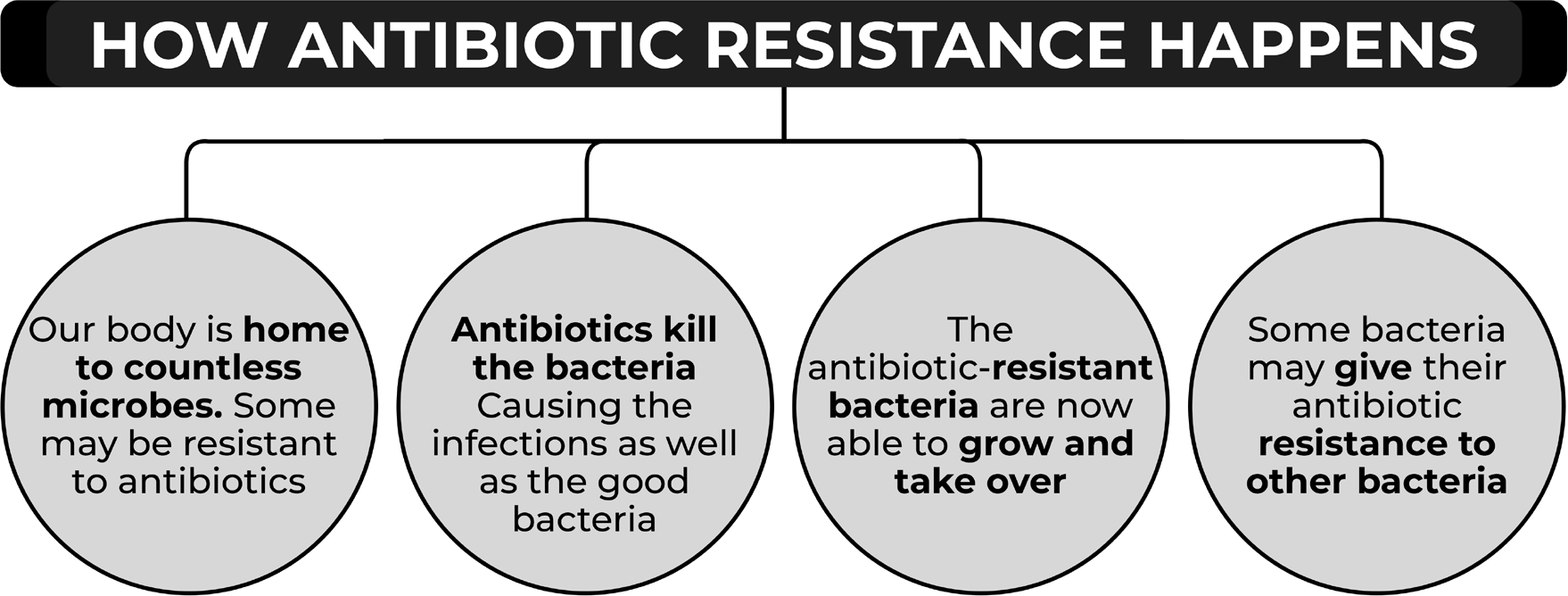
• Drug-resistant pathogens (AMR) are primarily driven by misuse and overuse of antimicrobials in humans, animals, and plants.
• AMR affects countries at all income levels and regions, with poverty and inequality being the most significant.
• AMR puts modern medicine at risk, making infections harder to treat and other medical procedures riskier.
• The world faces an antibiotics pipeline and access crisis, with an inadequate research and development pipeline and urgent need for equitable access to vaccines, diagnostics, and medicines.
• AMR also has significant economic costs, with the World Bank estimating AMR could result in $1 trillion in additional healthcare costs by 2050 and $1 trillion to
$3.4 trillion GDP losses per year by 2030.
• Priorities to address AMR include preventing infections, ensuring universal access to quality diagnosis and treatment, and strategic information and innovation, such as surveillance of AMR and antimicrobial consumption/ use.
Reasons for AMR
• Poor hygiene and infection prevention and control
• Overuse of antimicrobials
• Over prescription by doctors and Non-prescription purchase in many countries
• If a person does not complete a course of antimicrobial drugs, some microbes may survive and develop resistance to the drug
• Practice of adding antibiotics to agricultural feed promotes drug resistance
• Environment plays a significant role wherein waste from farms, factories, community (such as mass bathing) and healthcare settings can contribute to AMR through environmental routes