ARCHITECTURAL PROGRESS DURING MUGHAL PERIOD
Mughal Architectural style is an assimilation of Indo-Islamic, Persian, Central Asian and Indian Hindu architectural elements.
Note: Mughals deliberately incorporated many elements from the Rajput architectural style. Examples Some of these elements are Chhajja, Chattra, Jali and Jharokha.
Monuments built by Babur:
• He did not get much time to spend on major building projcts.
• The Kabuli Bagh Mosque of Panipat and Jama Masjid of Sambhal were built during his reign.

• He brought the Charbagh Style of architecture to India.
• This style refers to a square or quadrilateral garden divided into four smaller sections/gardens by walkways or water channels.
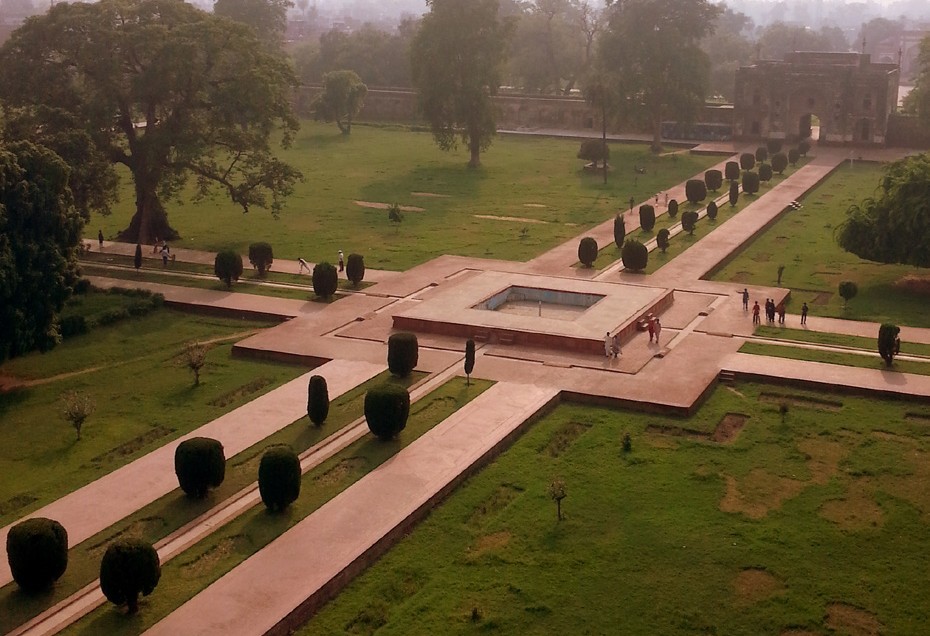
Charbagh Style at the Tomb of Jahangir in Lahore, Pakistan
Monuments built by Humayun:
• Humayun constructed the city of Dinpanah (Delhi) in 1533 AD.
• Humayun’s Tomb was built by his wife Bega Begum (she was later buried here).
Monuments bulit by Akbar:
Features of Akbar’s architecture:
• Use of Red Sandstone
• Massive Size
• Hindu architectural influence
• Provincial-style influence
• An ideal synthesis between Hindu and Muslim art traditions
Fatehpur Sikri:
Akbar built the new city of Fatehpur Sikri in the honour of Sheikh Salim Chishti in 1569AD.

Various significant monuments at Fatehpur Sikri:
Because of its historical importance as the capital of the
Mughal Empire and its outstanding architecture, Fatehpur Sikri was awarded the status of UNESCO World Heritage Site in 1986
Forts Built by Akbar:
• Agra Fort
• Lahore Fort
• Ajmer Fort
• Allahabad Fort


Allahabad Fort
•
Jama Masjid
• Ibadat Khana A meeting house built in 1575 AD by Akbar to organize discussions on religious matters.
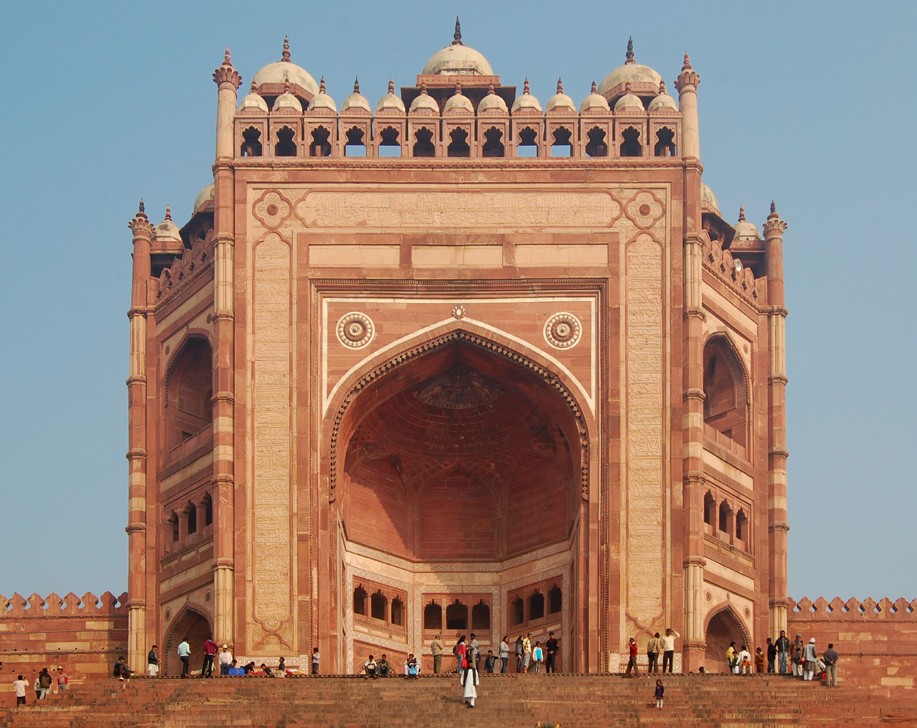
• Buland Darwaza Built in the commemoration of
victory over Gujarat.
• Panch Mahal Used for entertainment and relaxation.
• Birbal’s Palace Famous for its Double Dome and influence of Hindu Style.
• Jodha Bai’s Palace
• Mariam’s Palace
• Sultana Palace

Panch Mahal
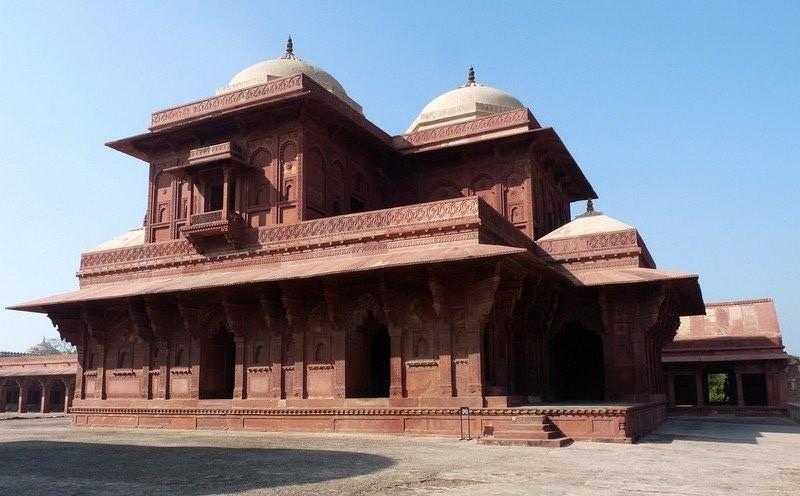
Birbal's Palace
Buland Darwaza
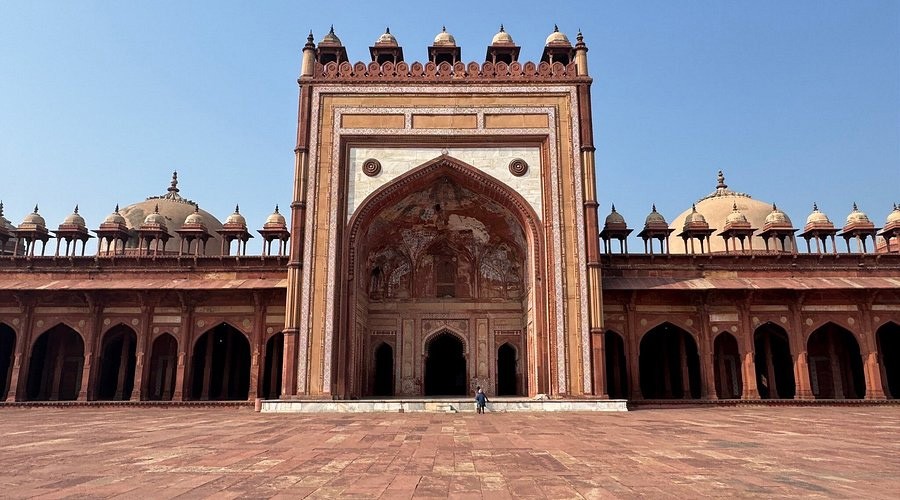
Jama Masjid, Fatehpur Sikri

Jodha Ba i Mahal
Monuments built by Jahangir:
• Jahangir did not take much interest in architectural activities. He was more inclined towards the art of Painting.
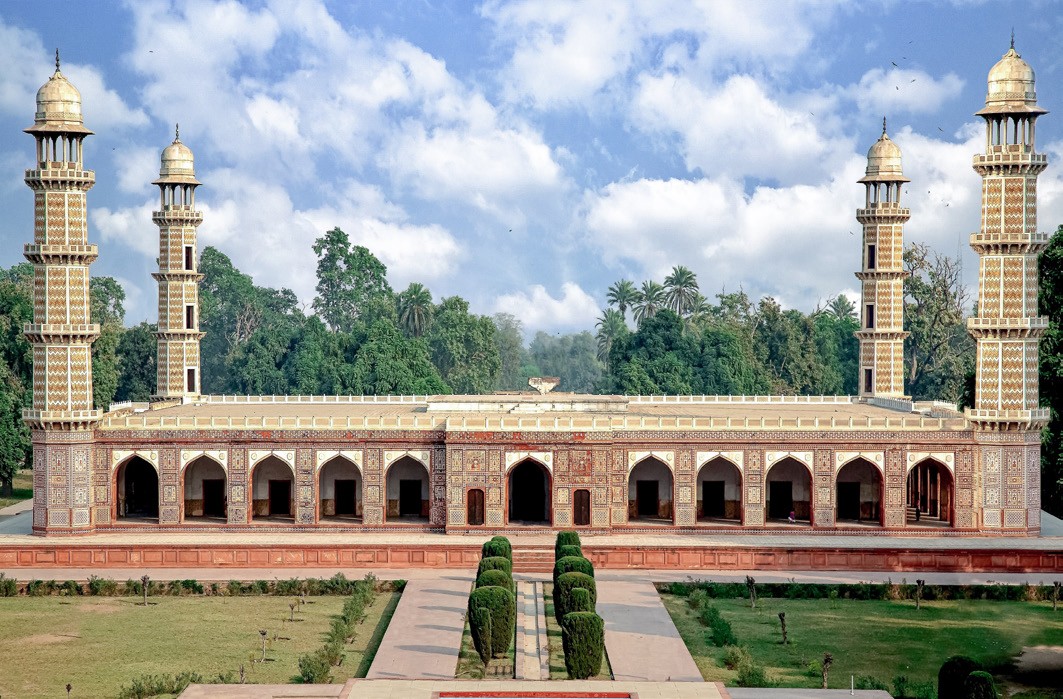
• However, the tomb of Itimad-ul-Daulah (Agra) was built by his wife Nurjahan in the memory of her father. Also, Nurjahan built Jahangir’s tomb at Shahdara (Lahore).
Tomb of Jahangir
Monuments built by Shah Jahan

Musamman Burj
• He brought about various modifications to Agra Fort. He added the Anguri Bagh (a garden), Khas Mahal (Private Audience Hall) and Sheesh Mahal (Glass Pavilion).
• During Shah Jahan’s reign, White Marble was used on a large scale in the construction of monuments.
• Musamman Burj Most lavishly decorated building in Shah Jahan palace in Agra. This tower has an octagonal copper dome, Pietra Dura inlay and pierced screens.
• Jama Masjid of Agra Built by Jahanara Begum
(Daughter of Shah Jahan) during his reign.
• Shah Jahan constructed the city of Shahjahanabad in Delhi (Red Fort and Jama Masjid of Delhi are located inside this city).
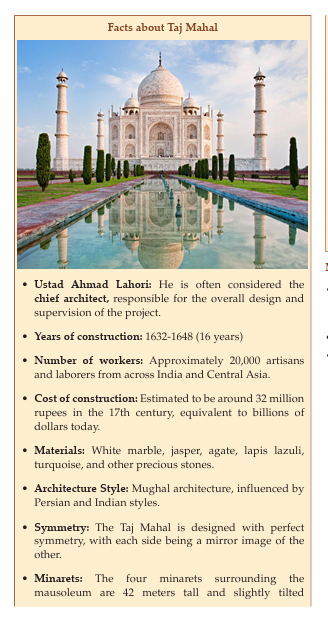
• Taj Mahal A mausoleum which was constructed by Shahjahan in the memory of his beloved wife, Mumtaz Mahal

Monuments built by Aurangzeb:
• Moti Masjid (Pearl Mosque) located inside the Red Fort was built by Aurangzeb (Note: He built this mosque for his personal use).
• He also built the Badshahi Mosque in Lahore in 1674.
• Bibi Ka Maqbara: It is a mausoleum of Aurangzeb’s beloved wife RabiaUd-Daurani (Dilras Banu Begum) in Aurangabad, Maharashtra.
¾ It is believed to be constructed by Prince Azam Shah in memory of his mother during 1651 to 1661 A.D.
¾ lts architectural style was based on the well-known ‘Taj Mahal’. So, it is also called 'Second Taj Mahal' or 'Taj of Deccan'.

.