Ashoka’s Dharmic State:
Ashoka’s rule was righteousness.
• Yuktas, Rajukas, and Pradesikas were the officials who preached Dhamma policy.
Rock edict 6 mentioned that he must be informed about all the happenings around the kingdom.
Rock edicts 7 and 12 mentioned that all religions must maintain harmony.
Rock edict 2 mentioned that animal care must be taken properly.
During the Mauryan period in ancient India, the Mauryan rulers demonstrated their power through monumental stone sculptures and architectural structures.
Ashoka played a pivotal role in promoting the worship of stupas and patronised various art forms, including stone sculptures, ring stones, disc stones, terracotta figurines, and stupa architecture. E.g., Lomasha Risi cave, Barabara hills near Gaya, Dhauli caves near Bhubaneswar, etc.
Stupa Construction:
• Sanchi Stupa is the most famous of the Ashokan stupas.
Piprahwa Stupa is the oldest one.
• Location of 9 Stupa built after the death of Buddha: Rajagriha, Vaishali, Kapilavastu, Allakappa, Ramagrama, Vethapida, Pava, Kushinagar and Pippalivana. Hence these were commerative and votive structures built to store relics.
• While they were popularized by the Buddhist tradition, they had pre-Buddhist existence.

• There are two types of Stupa architecture: 1. Built up and
• Rock cut (Chaitya)
• Stupa was one of the main features of propagating and establishing Buddhism.
• It endured the split between Hinayana and Mahayana and became a significant symbol representing Buddhist ideals. The stupa embodies the teachings of Buddhism and encapsulates its core characteristics.
Art and Culture:
•
Torana: Positioned at the East, West, North, and

South, these gateways feature motifs and stories (Jatakas) from the Buddha’s life and other significant events. They help individuals focus and enter a meditative state.
• Circumambulatory Path: Shaped to symbolize the Earth's orbit around the sun, this path allows devotees to walk around the stupa in a meditative process.
• Anda: The hemispherical dome represents the infinite dome of the heavens, symbolizing a connection to the eternal.
• Garbhagriha: This sacred space within the stupa, located inside the Harmika atop the Anda, preserves the relics of revered sadhus or nuns. The altar-like structure signifies the need to relinquish worldly attachments to attain higher spiritual states.

• Chatri: The three Chatris in Sanchi are said to represent the three most important things of Buddhism 1. Buddha 2. Dhamma 3. Sangha
• Thus, the Stupa’s while depicting folk motifs and narratives successfully expound Buddhist ideals.
Rock Cut Caves:

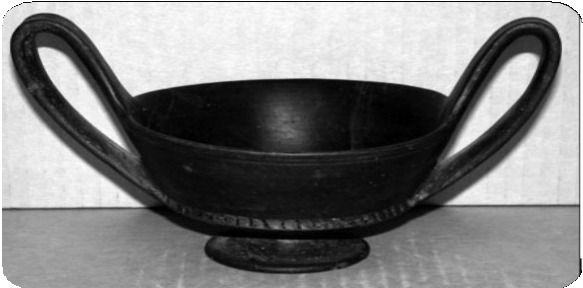
by black paint and a highly lustrous finish and were generally used as luxury items. Kosambi and Patliputra indicate NBPW pottery.
• This period saw the emergence of Rock-cut cave architectures, often used as Viharas, i.e., living quarters, by the Jain and Buddhist monks.
• Barabar caves at Gaya, Bihar (called the Sudama and Lomas Rishi Caves) were used by the Ajivika sect, as a Chaitya i.e., worshiping place, later, they became popular as Buddhist monasteries. They had a highly polished finish on the interior walls and decorative gateways.
• The Sudama Cave was dedicated by the emperor Ashoka in 261 BC and consists of a circular vaulted chamber with a rectangular mandapa.
• The Lomas Rishi Cave was carved out of a huge, rounded granite rock and has an arch-like shape façade imitating the contemporary timber architecture. The internal surface is highly polished.
Sculptures, Pottery:
• Stone and terracotta sculptures were primarily used for the decoration of stupas, in the Torana and Medhi, and as a form of religious expression. E.g., Didarganj Yakshini, a polished stone sculpture of a female figure.

• Mauryan Pottery is also known as Northern Black Polished Ware (NBPW).