INTRODUCTION
The governments on India have instituted various awards and honours to motivate and encourage people with special skills and creativity. The government of India bestows following honours annually to those who have achieved outstanding merit in their field.
Bharat Ratna
It is highest civilian award in India. It was instituted on 2nd January 1954. It is conferred as a mark of recognition for exceptional service or performance of highest order. It was initially given to people for their achievements in the field of literature, science, public services and arts. These criteria were expanded in December 2011 to include every field of Human endeavour.
An Indian council of ministries headed by the Prime Minister recommends names for Bharat Ratna to President of India. A maximum of only 3 nominees can be awarded in a year. The recipients get a certificate signed by President of India and a medallion shaped like a Pipal leaf. No monetary grant is offered in this award. Bharat Ratna recipients enjoy seventh rank in India in terms of order of precedence.
C. Rajagopalachari, Sarvepalli Radhakrishnan and C.V. Raman were the first Indians to receive this honour in 1954.

Padma Awards
These awards were established in 1954 and includes Padma Vibhushan, Padma Bhushan, Padma Shree. They are given to deserving persons for their outstanding contributions to sports, art, social work, civil service, literature and education, public affairs, science and technology, trade and industry, and other sectors. These awards are announced by Indian government on Republic Day every year.
The Padma awards are subject to a number of restrictions, including the following:
A person who has received a lesser degree of the Padma awards can only be granted a higher degree of honour after five years or more following the last conferment.
Awards are rarely granted posthumously, but exceptions might be made if the case is particularly compelling.
The achievements of the individual to be chosen should have a component of public service. It should not be based just on exceptional performance in any field, but rather on exceptional performance plus.
Government employees, including those employed by Public Sector Undertakings, are not eligible for these rewards, with the exception of physicians and scientists.
All citizen can nominate or recommend anybody including themselves for these awards. The list of names for these awards are submitted to the Padma Awards committee (It is headed by the Cabinet Secretary and includes Home Secretary, Secretary to the President, and four to six eminent persons as members), formed by Prime Minister of India. This committee forwards them to Prime Minister and
the President for their approval.

Padma Awa


•
Padma Vibhushan: It is the Republic of India’s second most prestigious civilian award. Those who are honoured with the award are presented with a citation certificate and a medal with a lotus flower in the centre and the words “Desh Seva” etched on the obverse.
• Padma Bhushan: It is the government of India’s third- highest civilian honour, granted to persons who have contributed to India’s international prestige. In March or April, the President of India bestows the honour at a lavish ceremony at the Rashtrapati Bhawan.

• Padma Shri: It is the Republic of India’s fourth highest civilian honour, granted by the government for outstanding contributions to different fields such as arts, literature, sports, politics, industry, medical, social service, and so on.
National Film Awards


These awards were started in 1954. The Directorate of Films Festivals has been managing these awards since 1973. This is a government of India entity. The winners are chosen by a national selection committee appointed by the government. The President of India confers these awards. The awards are presented not just to the finest films from India’s Bollywood industry, but also to the best films from other countries.
The following are the five key categories for which this award is given:
Dadasaheb Phalke Award
It is the highest cinema award in India. It is a lifetime achievement award conferred on a film personality for his/her outstanding contribution to growth and development of Indian Cinema. It is named after Dadasaheb Phalke, the father of Indian cinema. It is held every year by the Directorate of Films Festivals.

Jnanpith Award
It is the highest literary honour in India. It was instituted in 1961. Every year the Bharatiya Jnanpith presents this award to an author for his/her outstanding contribution towards literature. Bharatiya Jnanpith is a research and cultural institute. It was established by Shahu Shanti Prasad Jain in 1944.
Sahitya Akademi Award
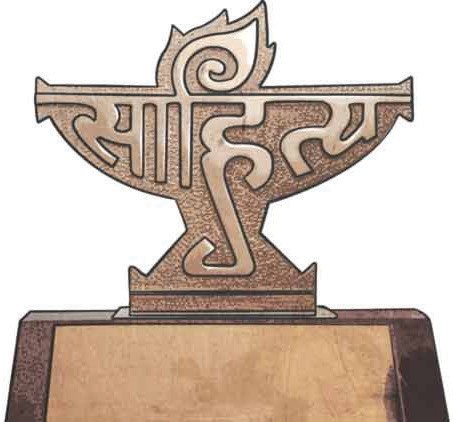
It is second-highest literary honour conferred by Sahitya Akademi. It is given to writers for outstanding literary work published in any of the 24 major Indian languages (22 Indian Languages included in the eighth schedule, English and Rajasthani language). It was instituted in 1954. Established in 1954, the award comprises a plaque and a cash prize of
₹ 1,00,000.
Criteria for Choosing Awardee:
• The author must be Indian National.
• A book or work that is eligible for the award must make a significant addition to the language and literature of the genre.

• When two or more works have similar worth, specific factors such as overall literary contribution and standing of authors will be considered when the prize is announced.
Other Sahitya Akademi Awards
• Sahitya Akademi Bal Sahitya Puraskar is awarded to an author for his or her overall contribution to children’s literature, and it is based on novels that were first published in the five years before the year of the award.
• The Sahitya Akademi Yuva Puraskar honours novels written by authors under the age of 35.
Sahitya Akademi Fellowships
• These fellowships are conferred by Sahitya Akademy to encourage individuals involved in the development of Indian language and Literature. These fellowships include Bhasha Samman, Translation Awards, Ananda Coomarswamy Fellowships and Premchand Fellowships.
• Bhasha Samman
• This is a special award given by Sahitya Akademi to writers for their significant contribution to development of Indian languages. It was instituted in 1996 for writers, editors, collectors, scholars and translators.
Translation Awards
These awards were instituted in 1989. These are presented for contribution in translation works of other languages into any of 24 major Indian languages.
Ananda Coomarswamy Fellowship
• It is named after Sri Lankan Tamil writer Ananda
Coomarswamy. It was instituted in 1996. Asian scholars are eligible for this fellowship.
• They are encouraged to spend 3 to 12 months in India on a literary project.
Premchand Fellowship
• It is named after the famous Hindi and Urdu writer Premchand and instituted in 2005.
• It is presented to individual of eminence from SAARC countries involved in the field of culture.
Saraswati Samman
It is an award presented every year to people for their outstanding literary works in any of the 22 languages included in eighth schedule of the Indian Constitution. It was instituted by K.K. Birla Foundation in 1991. Harivansh Rai Bachchan was the first recipient of Saraswati Samman. He received it for his autobiography.
Vyas Samman
The Vyas Samman is a literary prize that was first given out in 1991. The K. K. Birla Foundation awards it every year, and it comes with a monetary prize of Rs. 2,50,000. The literary work must be in Hindi and published within the last ten years to be eligible for the prize.
Kalidas Samman
It is given to people for their contribution in the fields of classical Dance, Theatre, Classical Music and Plastic Arts. It was instituted in 1980. It is annually presented by the government of Madhya Pradesh.