Cell Structure
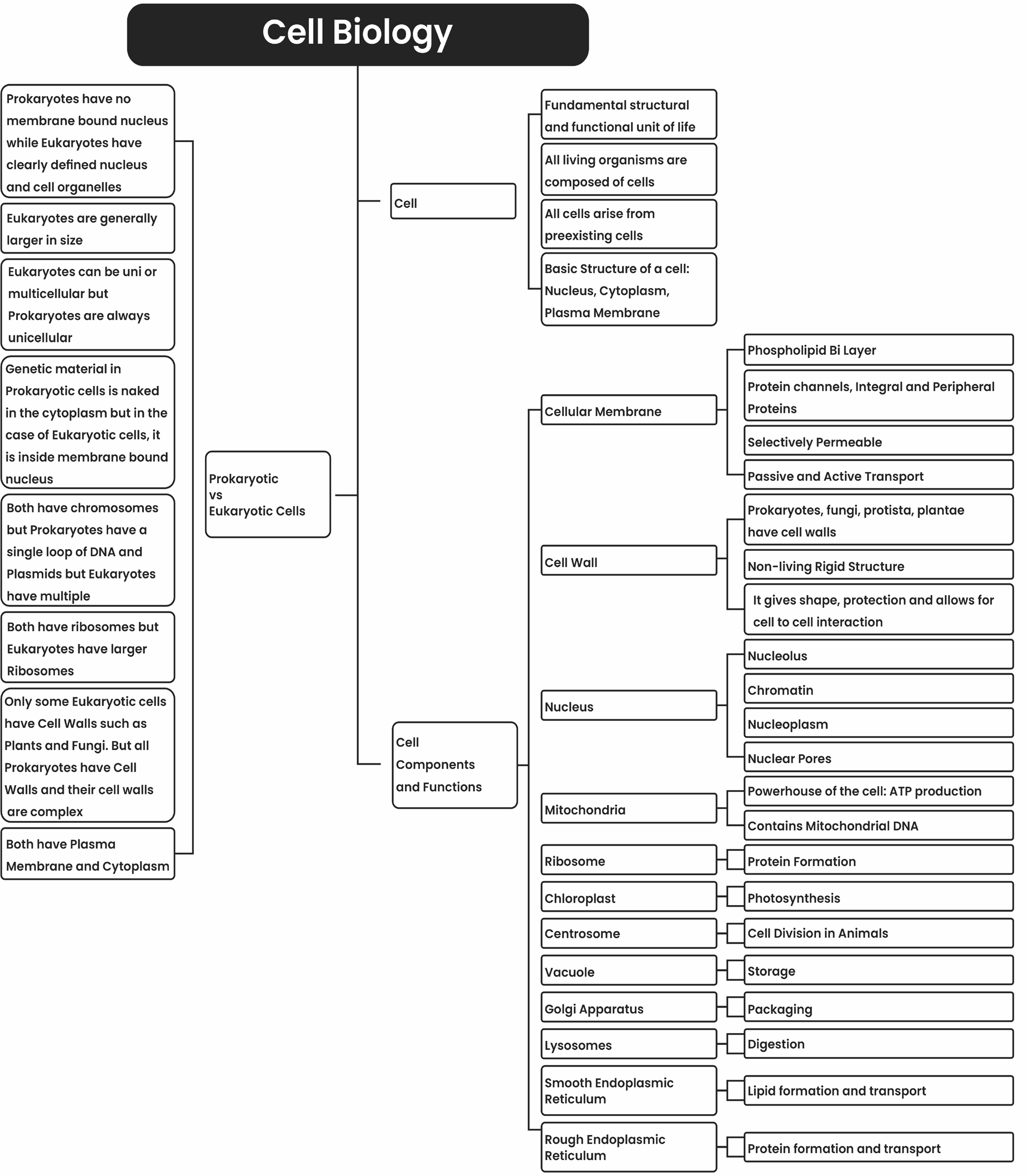
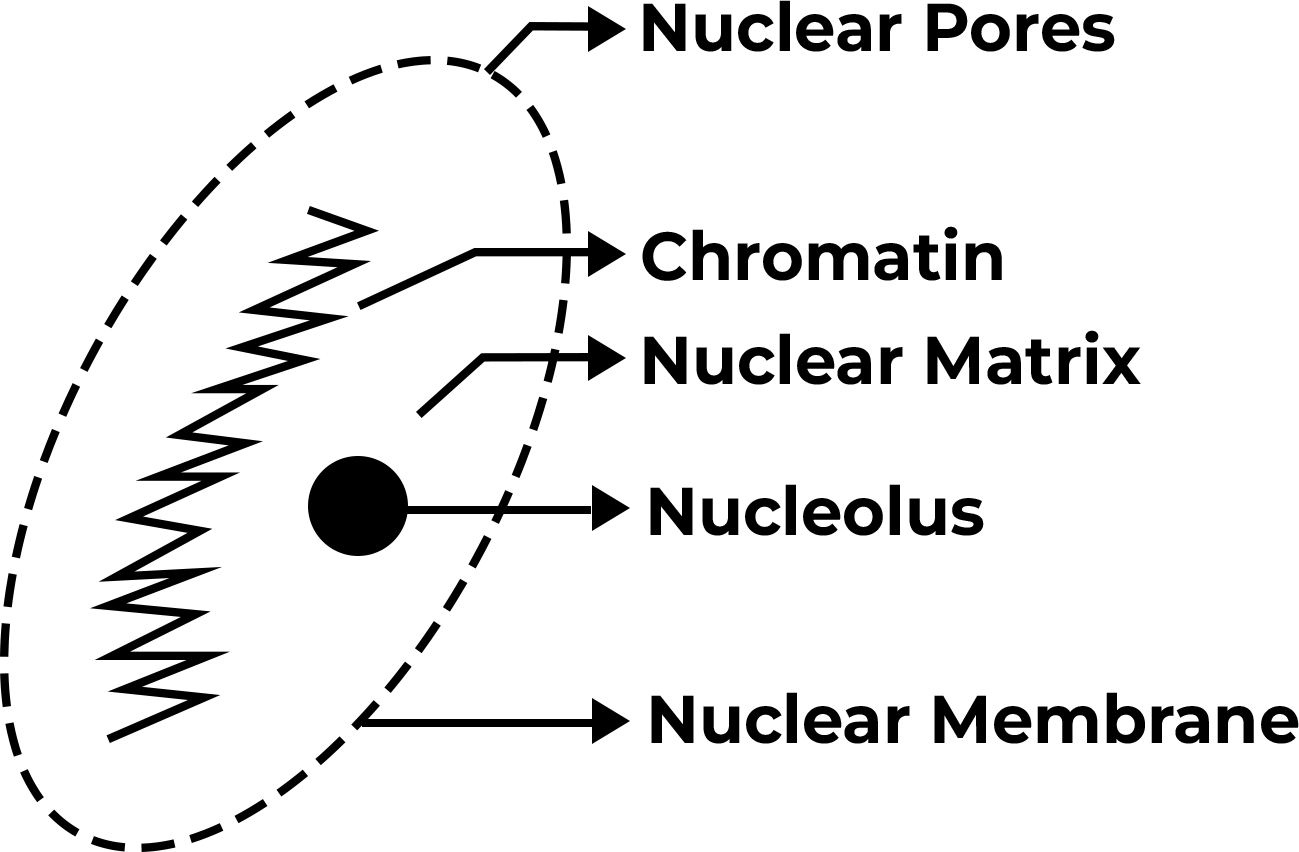
Nucleus- It is the brain of the cell. It controls all the functions of the cell or cellular functions. Nuclear pores are the passages through which movement of RNA and protein molecules takes place in both directions between the nucleus and the cytoplasm. Nuclear matrix or the nucleoplasm contains nucleolus and chromatin. The content of the nucleolus is continuous with the rest of the nucleoplasm as it is not a membrane bound structure. It is a site for active ribosomal RNA synthesis. During different stages of cell division, cells show structured chromosomes in place of the nucleus. The membrane that surrounds the nucleus is known as the nuclear membrane, sometimes known as the nuclear envelope. A double lipid bilayer makes up the nuclear membrane. Each cell’s nucleus houses chromosomes, which are structures that resemble threads and contain the DNA molecule. Each chromosome is composed of DNA that has been tightly wound around proteins known as histones numerous times to support its structural integrity. Under a microscope, it is impossible to see chromosomes in the nucleus of a cell.
Cell Membrane- It is the boundary of the cell. It houses the entire cell and its components. It binds the cell. It is mainly composed of lipids and proteins. The major lipids are phospholipids that are arranged in a bi-layer. The membrane is selectively permeable to some molecules present on either side of it.
Passive transport- When a substance can enter the cell without any spending of energy
Active transport- When energy has to be spent for a foreign substance to enter the cell.
Cell wall- It is a non-living, rigid structure which forms an outer covering for the plasma membrane of fungi and plants. It gives shape to the cell. It also protects the cell from mechanical damage and infection. It allows for cell- to-cell interaction and provides a barrier to undesirable macromolecules.
Algae: have cell wall, made of cellulose, galactans, mannans
Plants: cell wall consists of cellulose, hemicellulose, pectins and proteins.
Animals generally do not have cell walls primarily because they don’t need the rigidity. Because of the motility, animals do not require much rigidity. Therefore, cell wall is absent and only cell membrane is sufficient to provide rigidity, shape etc.
Most Fungi have cell walls
Prokaryotic cells also have cell walls
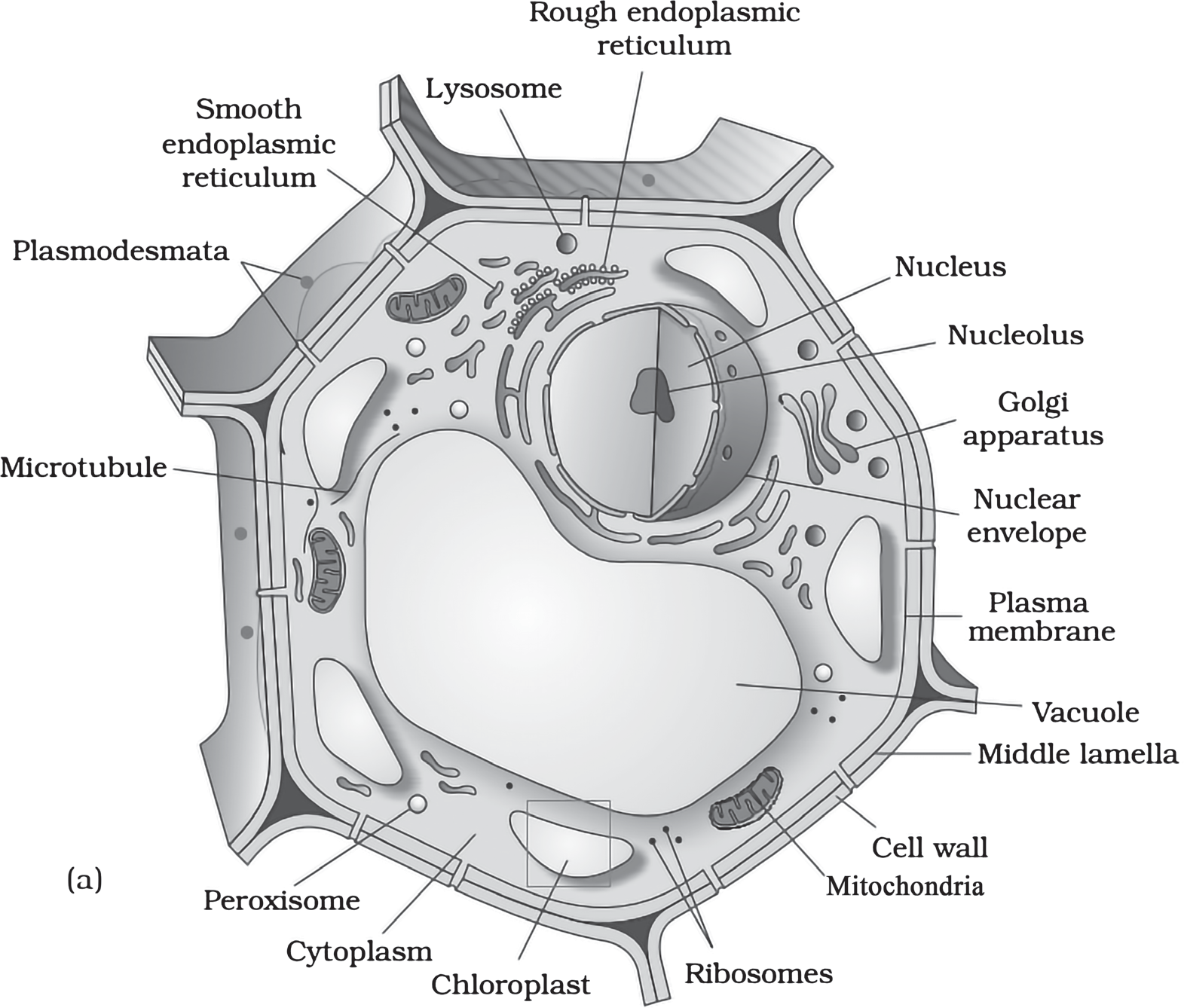
Cytoplasm- Inside this boundary (Cell Membrane) there is a fluid matrix called the Cytoplasm.
The Endoplasmic Reticulum (ER)- It is a network or reticulum of tiny tubular structures scattered in the cytoplasm. It divides the intracellular space into two distinct compartments, i.e., luminal (inside ER) and extra luminal (cytoplasm) compartments. It often has ribosomes attached to its outer surface. The endoplasmic reticulum bearing ribosomes on their surface is called rough endoplasmic reticulum (RER). In the absence of ribosomes, they appear smooth and are called smooth endoplasmic reticulum (SER). RER is frequently observed in the cells actively involved in protein synthesis and secretion. They are extensive and continuous with the outer membrane of the nucleus. The smooth endoplasmic reticulum is the major site for synthesis of lipids.
Ribosomes- It is responsible for forming protein in the cells. It doesn’t have a membrane of its own. It is present in prokaryotic and eukaryotic cells.
Golgi Apparatus- The Golgi Apparatus principally performs the function of packaging materials, to be delivered either to the intra-cellular targets or secreted outside the cell. Golgi apparatus is the important site of formation of glycoproteins and glycolipids.
Lysosome- Lysosomes are known as the "suicide bags" of the cell due to their role in digestion and potential for self-destruction. These are membrane bound vesicular structures formed by the process of packaging in the Golgi apparatus. These enzymes are capable of digesting carbohydrates, proteins, lipids and nucleic acids.
Vacuole- The vacuole is the membrane-bound space found in the cytoplasm. It contains water, sap, excretory products and other materials not useful for the cell. The vacuole is bound by a single membrane called tonoplast. In plant cells the vacuoles can occupy up to 90 per cent of the volume of the cell.
Plastids- Plastids are found in all plant cells. These are easily observed under the microscope as they are large. They bear some specific pigments, thus imparting specific colours to the plants. Based on the type of pigments plastids can be classified into chloroplasts, chromoplasts and leucoplasts. The chloroplasts contain chlorophyll and carotenoid pigments which are responsible for trapping light energy essential for photosynthesis.
Centriole/Centrosome- They aid in cell division (will discuss more later)
Mitochondria- They are membrane-bound structures with the outer membrane and the inner membrane dividing its lumen distinctly into two aqueous compartments, i.e., the outer compartment and the inner compartment. Mitochondria are the sites of aerobic respiration. They produce cellular energy in the form of ATP, hence they are called ‘power houses’ of the cell. The matrix also possesses a single circular DNA molecule, a few RNA molecules, ribosomes and the components required for the synthesis of proteins. The mitochondria divide by fission