DRAVIDIAN TEMPLE ARCHITECTURE
The temple architecture of South India is a stunning testament to the region’s rich history and vibrant culture. While the Pallavas laid the foundation in the early centuries, it was under the patronage of the Chola dynasty that this architectural style truly reached its zenith. This distinct form, known as Dravidian temple architecture, continues to captivate visitors with its grandeur and intricate details.
Key Features of Dravidian Temples
The first thing that strikes the eye is the Gopuram, a monumental gateway at the entrance of the temple complex. These towering structures, adorned with colorful sculptures and mythological figures, act as invitations to the sacred space within.
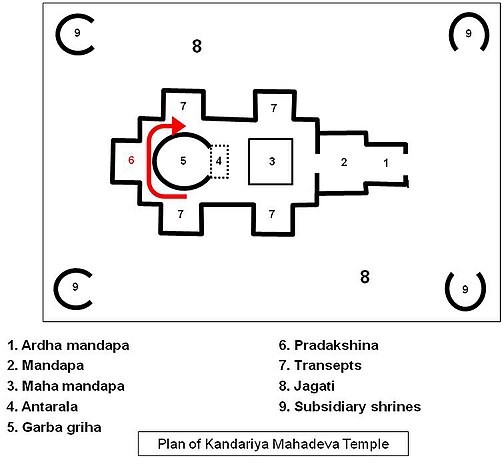
Panchayatan layout of a Dravidian temple
The traditional layout of a Dravidian temple follows the Panchayatan style, featuring a central shrine (garbhagriha) dedicated to the main deity, surrounded by four smaller shrines for other deities associated with the main one. This symbolizes the interconnectedness of the divine realm.
In contrast to the curving spires of North Indian temples, Dravidian temples feature a unique stepped pyramid structure atop the garbhagriha known as the Vimana. These towering pyramidal structures rise majestically towards the sky, each tier adorned with intricate carvings and mythical creatures.
Crowning the Vimana is the Shikhara, an octagonal- shaped element resembling the Kalash found in North Indian temples. However, unlike the spherical Kalash, the Dravidian Shikhara tapers upwards, adding a touch of elegance and distinct identity.
Stepping inside a Dravidian temple, one encounters several fascinating elements. The entrance to the garbhagriha is often guarded by sculptures of Dwarapalas, fierce guardians. Inside, the sanctum sanctorum might house intricate carvings of Mithunas (divine couples) and Yakshas (nature spirits).
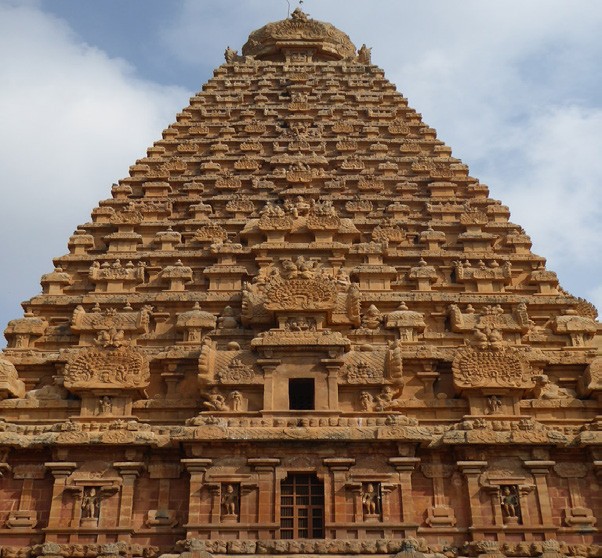
Vimana of Brihadeshwara Temple, Thanjavur
A unique feature of Dravidian temple complexes is the presence of a water tank or Kulam within the enclosure. This tank holds both symbolic and practical significance, serving as a source of purification for devotees and also sustaining the surrounding plant life.
Dravidian temples are typically enclosed within a compound wall, creating a distinct sacred space separated from the outside world. This enclosure enhances the sense of serenity and devotion within the temple complex.
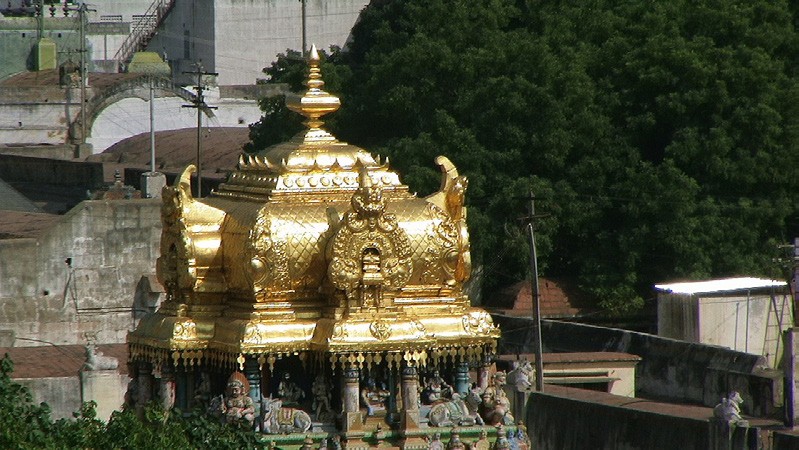
Shikhara o f Meenakshi Amman Temple, Madurai