EDGE COMPUTING
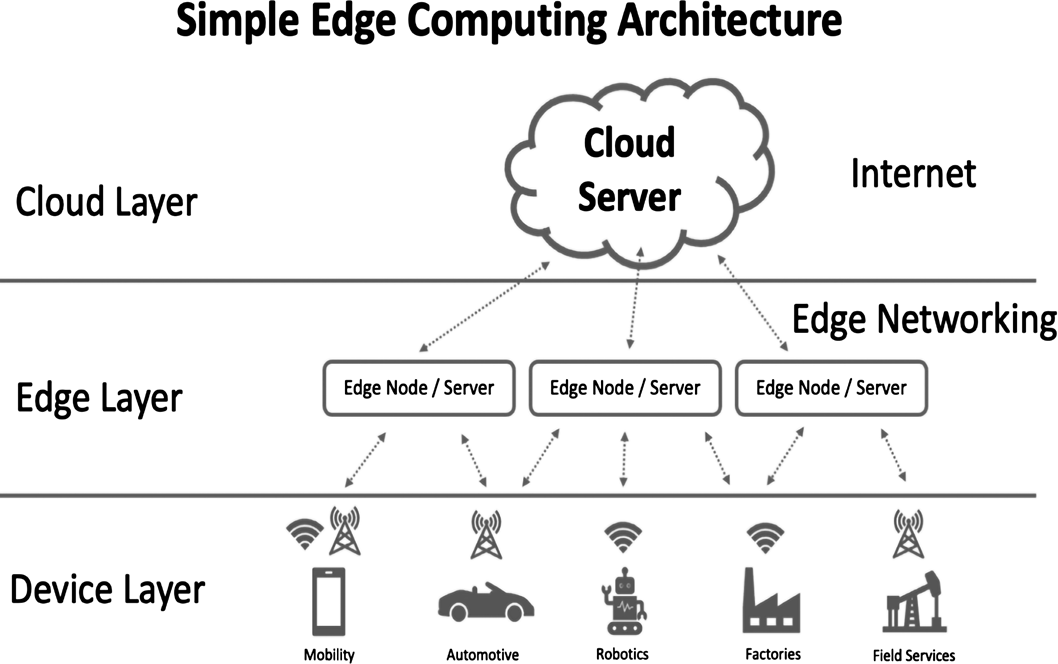
Edge computing is a distributed information technology architecture in which client data is processed at the periphery of the network.
Edge are the devices which are connected with the Local Fog Nodes, only relevant data related to the Edge devices will be connected or linked with the cloud server.
• Data is analysed locally.
| Cloud Computing | Edge Computing |
| Computation is not done at the source | Computation is done near- source |
| Preferredtoprocess normal data | Preferredtoprocesstime- sensitive data. |
| Latency is more | Reduced latency |
| Less secure | More secure |
Application of Edge Computing
• Edge Computing in Banking and Finance Industry: It enables high-speed, large-scale distributed computing management. Among its uses in banking and finance are:
• ATM Security: By incorporating image recognition on ATMs, edge AI can be utilized to examine video feeds at the edge and enhance ATM security.
• Data Privacy: To reduce the possibility of data theft, privacy and security regulations must be adhered to while transferring data to a central place using cloud computing.
• Edge Computing in Retail Industry: The lifespan of stores is increased when it is implemented in retail. Retail operations and services are improved and enhanced by it.
• Big Data and Analytics: It allows real-time data processing and analytics at the point of data generation itself by facilitating data gathering and analysis at the edge. Thus, make it simple for the store to leverage cutting- edge technologies like big data and artificial intelligence.
Advantages of Edge Computing
• Quick: When accessing a cloud-based video game library or streaming a video on services like Netflix, edge computing enables faster data processing and content delivery.
• Future Technology Enabled: 5G wireless technology and artificial intelligence, for example, provide for reduced latency (delay), quicker reaction times and easier
computer maintenance.
• Localised solution: In remote areas with little or no connectivity to a central location, it is recommended over cloud computing. Similar to a mini data center, these places need local storage and edge computing offers the ideal option.
• Data-Efficient: Only important data needs to be transferred over a network; less data doesn’t need to be delivered as soon as it is processed. Thus, the quantity of data that flows over the network is decreased by an edge computing network.