EVOLUTION OF DRAVIDIAN TEMPLE ARCHITECTURE
The Pallavas (Early Architects)
The story of Dravidian temple architecture unfolds like a grand epic and the Pallavas were its bold heroes who laid its very foundation in the 6th to 8th centuries. Though primarily Shaivites, they embraced diversity, leaving behind a legacy that encompasses both Vaishnava temples and echoes of Buddhist traditions.
Their architectural journey can be understood through a four-stage evolution:
First Stage: Mahendravarman I (Rock-cut Temples)

Dwarapalas at Brihadeshwara Temple, Thanjavur
Mahendravarman I, the early architect-king, introduced rock-cut temples known as mandapas (Note: In the Nagara style, mandapas referred only to assembly halls).
• Example: Exquisite cave temples at Mandagappattu, Mahendravadi, Tiruchirappalli, Vallam, Siyamangalam, and Tirukalukkunram.
Kailasanatha Temple, Kanchipuram
Second Stage: Narasimhavarman I
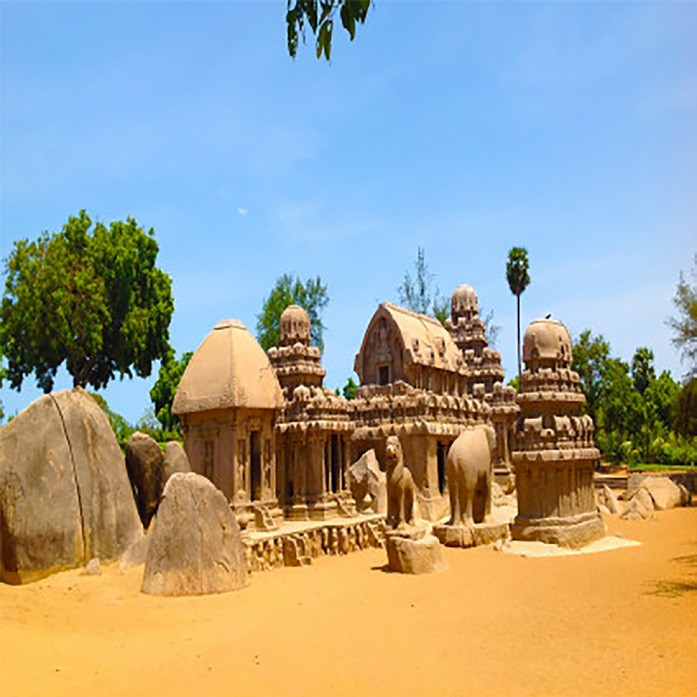
• Narasimhavarman I, also known as Mamalla, took rock-cut architecture to a new level of sophistication. He adorned these temples with intricate sculptures and introduced the concept of separate rathas within the mandapa.
•
Marvel at the Pancha Rathas (Five Chariots) in Mahabalipuram, each sculpted from a single granite boulder. The largest, Dharmaraja Ratha, stands as a testament to Mamalla's vision, and its design became
the blueprint for future Dravidian temples.
Five Rathas of Mamallapuram

Third Stage: Rajasimha (Era of structural temples)
• Rajasimha, also known as Pallava Narasimhavarman II, ushered in the era of structural temples. Moving away from rock-cut creations, he crafted magnificent edifices with soft sandstone blocks.
• A master piece of Pallava art and architecture is undoubtedly the Kailasanatha Temple at Kanchipuram. Its soaring vimana, intricately carved pillars and serene ambiance showcase the zenith of Pallava artistry.
Fourth Stage: Nandivarman (Smaller temples Reflection of the declining power of Pallavas)
• Nandivarman’s reign saw the construction of smaller yet exquisite temples such as the Vaikunthaperumal, Mukteshwar, and Matangeswara temples in Kanchipuram. These structures continued the Pallava tradition while hinting at the stylistic shifts that would shape Dravidian architecture in the centuries to come.