INTRODUCTION
We normally relate the terms diseases and illness interchangeably in relation to health, even though these words do not mean the same. Health is the general condition of a person in respect to all aspects of life. It is also a level of functional and/or metabolic efficiency of an organism. The word metabolic is the adjective of the term metabolism which means the whole range of big chemical processes that occur within us or any living organism to produce energy and basic materials needed for important life processes. Diseases and illness adversely affect these processes. And thus health, diseases and illness are inter-related.
FOOD AND NUTRIENTS
Food is any solid or liquid that, when ingested, digested, and assimilated by the body, supplies it with nutrients— vital components that keep the body healthy. It is a basic requirement for survival. Food gives us energy and helps the body grow and repair its tissues and organs. It also controls bodily systems and shields the body from illness.
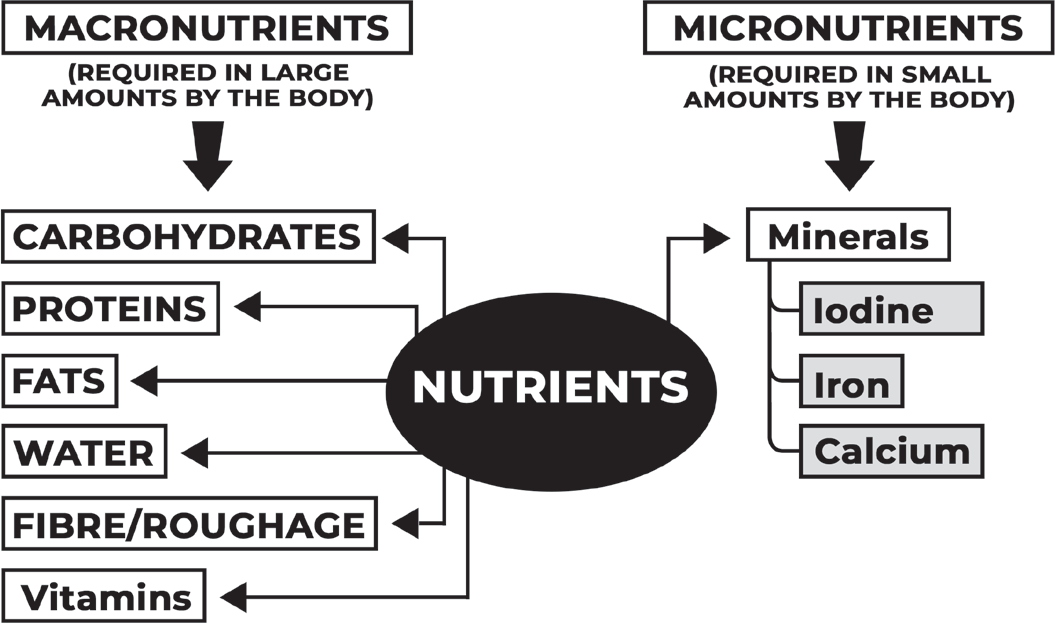
The process through which the body converts food into energy and bodily tissues is known as nutrition. It supplies vital nutrients for the body’s growth, repair, and energy
production as well as the efficient operation of several systems. Although it focuses on the human body, it is significant for all living things. People may feel and look their best, stay active and healthy both now and in the future, and maintain their health with a balanced diet that includes frequent intake of the right nutrients. The nutrients required for optimal bodily function are supplied by a well-balanced diet.
Nutrients, including carbohydrates, proteins, fats, minerals, vitamins, water, and fiber, are essential for maintaining health. Most foods contain multiple nutrients, such as milk with proteins and fats. Nutrients can be classified as macronutrients and micronutrients based on their daily consumption