Formation of Planning Commission
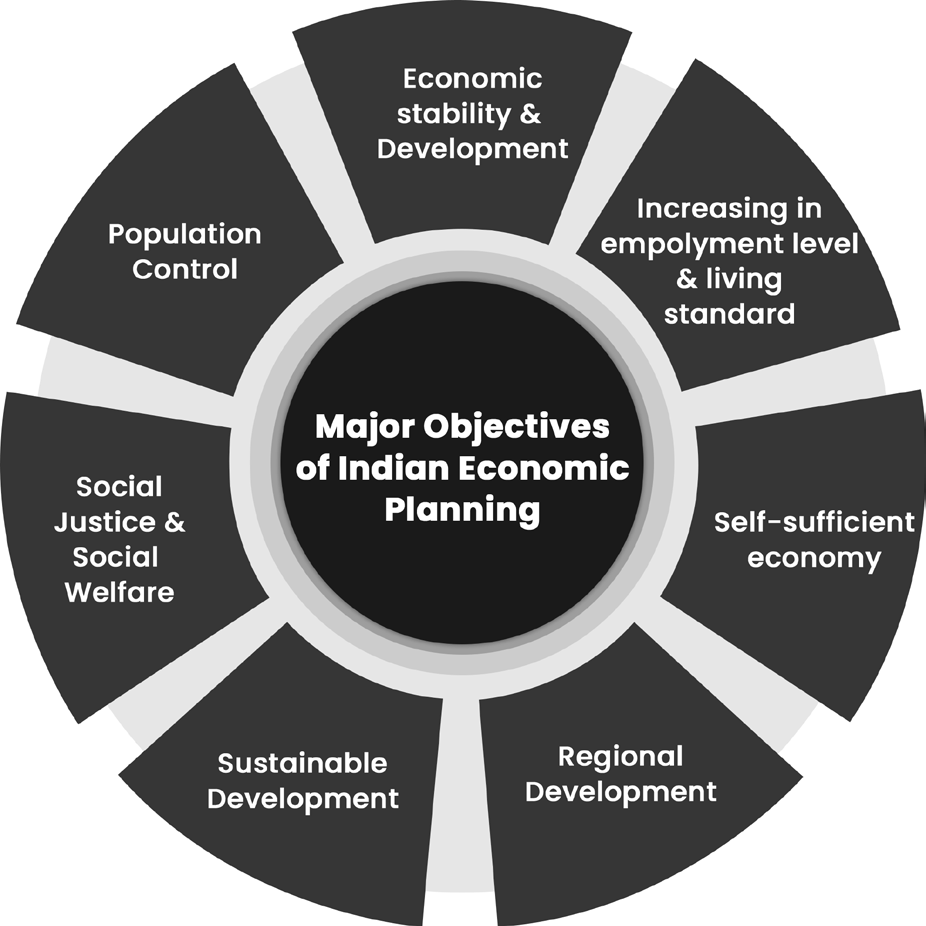
After Independence, the Planning Commission was established in March 1950 through a resolution from the Government of India. Its role was advisory, with its recommendations becoming effective only after approval by the Union Cabinet.
The functions of the Planning Commission, as outlined in the 1950 resolution, were as follows
To assess India’s material, capital, and human resources, including technical personnel, and identify areas where resources were lacking relative to national needs.
To create a plan for the optimal and balanced use of the country’s resources.
To define the stages of the plan’s implementation based on priorities and propose resource allocations for each phase.
To highlight factors that could hinder economic development.
To identify the conditions necessary for the successful execution of the plan within India’s socio-political context.
To determine the machinery required to ensure the smooth execution of the plan’s various stages.
To regularly review progress and recommend necessary policy adjustments to ensure the plan’s successful implementation.
Early Initiatives
Following the example of the USSR, India adopted the Five-Year Plan (FYP) model. The Government of India prepares a document outlining its income and expenditure for the next five years. As part of this, the central and state governments divide their budgets into two categories: the ‘non-plan’ budget, used for routine annual expenses, and the ‘plan’ budget, allocated for long-term projects as per the priorities set in the plan.
A five-year plan allows the government to focus on broader goals and implement long-term economic interventions. When the draft of the First Five-Year Plan was released in December 1951, it sparked a great deal of excitement across the country. It prompted extensive discussions among a wide range of people—academics, journalists, government employees, industrialists, farmers, and politicians alike