Geopolitical Significance of Sri Lanka
Sri Lanka's strategic location as an island state in the Indian Ocean has made it a key player in the geopolitics of the region, attracting the interest of several major global powers.
Historical examples of Western interest in Sri Lanka’s position include the British Defence and External Affairs Agreement of 1948 and the 1962 Maritime Agreement with the USSR.
During the presidencies of J.R. Jayewardene (1978-1989) and Ranasinghe Premadasa (1989-1993), Sri Lanka was selected as the site for a Voice of America transmitting station, which was suspected of being used for intelligence gathering and electronic surveillance over the Indian Ocean.
In recent years, the most controversial involvement has been China’s significant role during the tenure of President Mahinda Rajapaksa. China has been constructing state-of-the-art, massive modern ports along the Indian Ocean, including in Gwadar (Pakistan), Chittagong (Bangladesh), Kyaukphru (Myanmar), and Hambantota (Sri Lanka).
China's "String of Pearls" strategy aims to encircle India by establishing dominance across critical points in the Indian Ocean.
Since 2015, Sri Lanka has continued to rely heavily on China for projects like the Port City and other largescale infrastructure developments funded by Chinese investments.
Sri Lanka's strategically located ports, situated along some of the busiest maritime trade routes in the world, add to its geopolitical significance.
Sri Lanka’s Colombo Port is the 25th busiest container port in the world and the natural deep-water harbour at Trincomalee is the fifth largest natural harbour in the world.
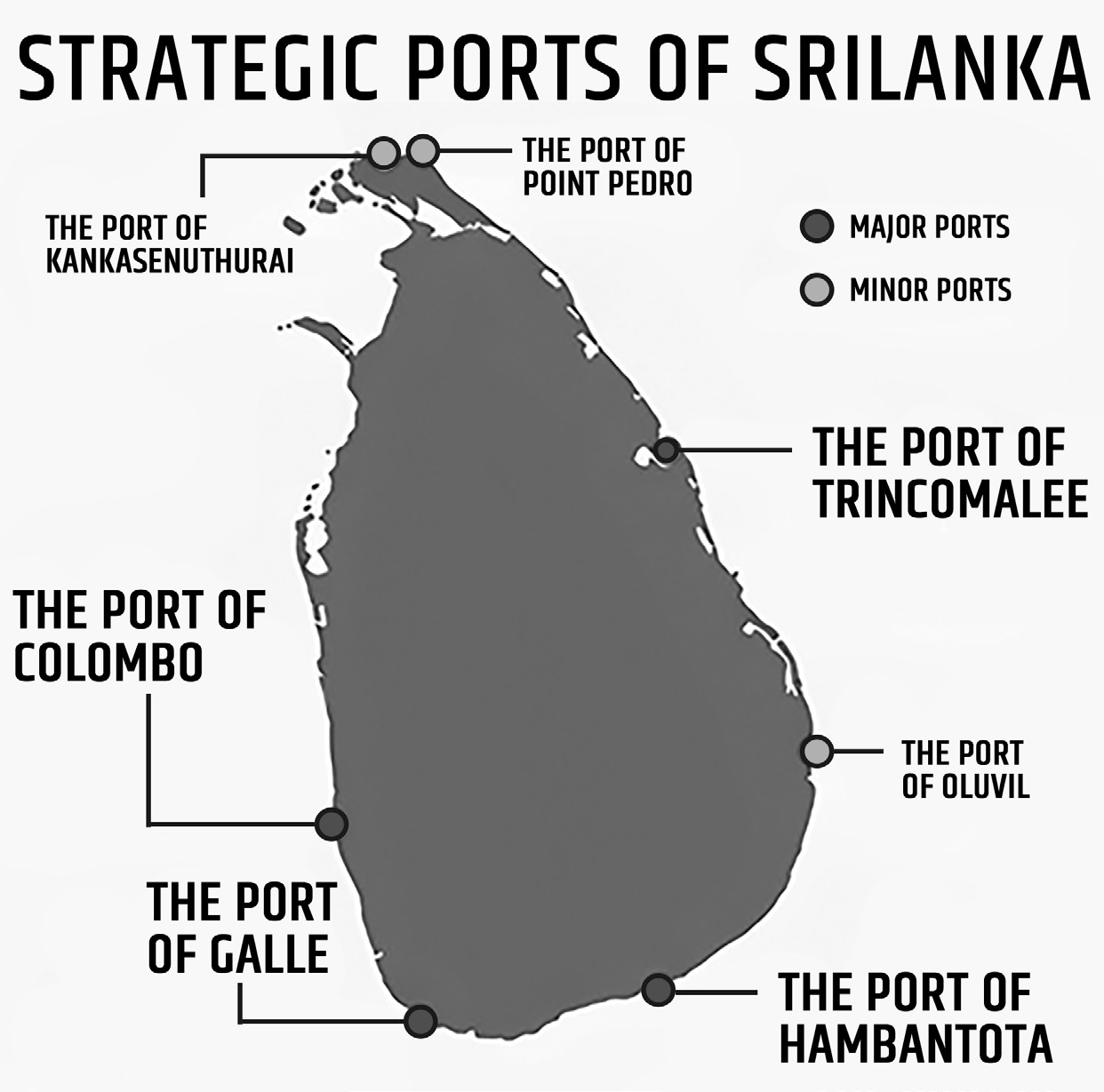
Port city of Trincomalee was the main base for Eastern Fleet and British Royal Navy during the Second World War.
Sri Lanka’s location can thus serve both commercial and industrial purposes and be used as a military base.