HAMPI: THE LOST CITY
Hampi, also known as Pampa Kshetra, Kishkindha Kshetra, and Bhaskara Kshetra, is a UNESCO World Heritage Site located in Ballari district, Karnataka, India.
It served as the capital of the Vijayanagara Empire from 1336 to 1565, until it was abandoned.
The city is situated on the banks of the Tungabhadra River, and its ruins showcase the grandeur of architectural design from that era.
Hampi's rulers were devoted patrons of religion and art, contributing to the construction of magnificent structures.
The city flourished under the rule of Krishna Deva Raya, who reigned from 1509 to 1529.
From 1336 to 1565, Hampi was governed by four different dynasties: the Sangama Dynasty, Saluva Dynasty, Tuluva Dynasty, and Aravidu Dynasty.
The Vijayanagara Empire, the last Hindu kingdom in India, reached its zenith during the height of Hampi’s prominence.
At its peak, Hampi was one of the richest cities in the world.
The Group of Monuments at Hampi is recognized as a UNESCO World Heritage Site.
Hampi continues to attract visitors from across the globe, who come to explore its stunning monuments and rich historical significance
Architecture at Hampi
Virupaksha Temple: The temple stands as a testament to the Vijayanagara Empire’s architectural prowess. Its impressive inscriptions date back to the 9th century, showcasing the history of devotion to Lord Shiva. The temple complex includes the Virupaksha-Pampa retreat,
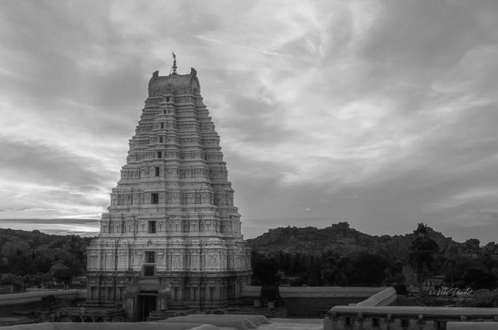
an evolution from a modest shrine to a revered religious site. The architecture features numerous halls for worship, antechambers, courtyards, and a pillared monastery, exemplifying the grandeur of South Indian temple architecture.
Vijaya-Vittala Temple: Renowned for its colossal structure and intricate design, this temple dedicated to Lord Vittala, an incarnation of Lord Vishnu, exemplifies the Dravidian style of architecture. Constructed initially by King Devaraya II and expanded under Krishnadevaraya, it houses enclosed and open Mandapas
showcasing remarkable musical pillars that produce melodic sounds when tapped. The stone chariot, a symbol synonymous with Hampi’s grandeur, resides
within this temple complex, captivating visitors with its detailed carvings.
Monolithic Bull: Positioned opposite the Virupaksha Temple, this Nandi Bull, representing Lord Shiva’s mount, remains an impressive spectacle despite its weathered state. Carved using
a primitive technique, it stands surrounded by colossal pillars, attracting tourists with its ancient craftsmanship and religious significance.
Elephant Stables: Providing insight into the royal lifestyle, these stables housed royal elephants during the empire’s reign. The structure, featuring Islamic-inspired domes amidst temple-like
architecture, showcases the amalgamation of cultural influences during that era.
Lotus Mahal: Nested within the Zanana enclosure, this architectural marvel, resembling a lotus, served as a leisure retreat for the women of the
Vijayanagara Dynasty. Its serene ambiance and intricate design showcase a blend of functional and aesthetic elements, reflecting the lifestyle of the royals.
Pushkarani: These sacred tanks represent the ancient town planning of Hampi
and served as venues for annual boating festivals. Surrounded by ornate pillars and arcades, these tanks were
significant in religious ceremonies and the ceremonial rides of deities during festivals.
Palace of Vira Harihara: Despite its current state of ruins, the remnants of this colossal palace testify to the grandeur of the Vijayanagara kings. Elaborate carvings and remnants of structures, including a
stage for royal elephants and a royal hall, provide glimpses into the opulent lifestyle of the era.
Hazara Rama Temple: This temple, translating to “a thousand Rama temple,” isadorned with intricately carved relicsdepicting the Ramayana and Dasara festival celebrations.
The extensive carvings on its walls narrate stories of royal processions and festivities, making it a treasure trove of historical and cultural significance.
Achyutaraya Temple: Originally dedicated to Lord Tiruvengalanatha, an incarnation of Lord Vishnu, this temple showcases sagas through its massive carved pillars and sculptures. The remnants, including carvings depicting Lord Vishnu’s blessings and celestial celebrations, provide glimpses into ancient Hindu mythology.
Hampi Bazaar: Hampi Bazaar, also known as Virupaksha Bazaar, is a well-known market place that used to be a thriving market during the Vijayanagara Empire. It stretches for more than one kilometre and is located in front of the Virupaksha Temple. The market has a series of old pavilions on both sides of the road, which were once used to sell exotic items like precious stones, jewellery, silk clothes, etc. Today, the market still operates, offering local items and crafts to visitors. The Hampi Bazaar is also a place where one can enjoy a local shopping experience
The cultural contributions of the Vijayanagara rulers were multifaceted and significant, encompassing architectural marvels, literary advancements, and the patronage of arts like music and dance, leaving a lasting legacy in South Indian history.