INTRODUCTION
India is known for its rich cultural and religious diversity, which is reflected in the numerous festivals celebrated across the country. Major Indian festivals are often marked by colorful traditions, rituals, and celebrations.
Role of Festivals
Indian festivals play a crucial role in the country’s cultural, social, religious, and communal life. They serve multiple purposes and have various significant roles:
• Preservation of Tradition: Festivals uphold and preserve cultural and religious traditions, passing them down through generations. They provide a sense of continuity with the past and help retain cultural identity.
• Promotion of Unity and Diversity: India’s diverse population celebrates a multitude of festivals. These festivals bring people from different backgrounds, languages, and regions together, promoting unity and social cohesion.
• Religious Significance: Many Indian festivals have religious roots and are dedicated to gods, goddesses, or religious figures. They provide opportunities for worship, prayer, and spiritual reflection.
Some of the Major Festivals Celebrated in India
•
Social Bonding: Festivals are occasions for family and community gatherings. They strengthen social bonds, foster relationships, and create a sense of belonging and togetherness.
• Promotion of Arts and Crafts: Festivals stimulate the creation and sale of traditional crafts, textiles, and handicrafts, supporting the livelihoods of artisans and preserving traditional craftsmanship.
• National and International Tourism: Some festivals are renowned worldwide and attract tourists, contributing to the tourism industry and promoting India’s cultural heritage on the global stage.
• Cultural Exchange: Festivals also provide opportunities for cultural exchange between different regions and communities within India. People from diverse backgrounds often participate in each other’s festivals, fostering mutual understanding and respect.
In summary, Indian festivals serve as a multifaceted and integral part of the country’s social, cultural, and religious fabric. They contribute to unity, tradition, spirituality, economic activity, and the overall well-being of society. Each festival has its unique significance and role, reflecting the diversity and richness of India’s cultural tapestry.


| FESTIVAL | DETAILS |
| Deepawali | Known as the Festival of Lights, Diwali is one of the most widely celebrated festivals in India. It marks the victory of light over darkness and good over evil. People decorate their homes with lamps, burst fireworks, exchange gifts, and partake in traditional sweets and snacks. |
| Holi | Holi, the Festival of Colors, is a vibrant and joyous celebration. It involves throwing colored powders and water at each other, singing and dancing, and enjoying festive foods. It signifies the arrival of spring and the triumph of good over evil. |
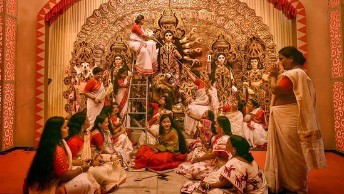
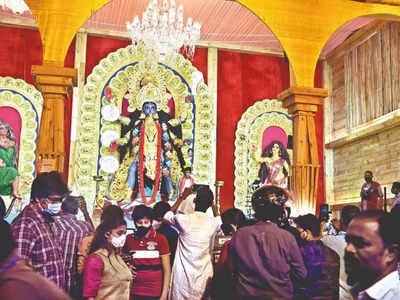
| Navratri | Navratri is a nine-night festival dedicated to the worship of Goddess Durga. It involves colorful dance forms like Garba and Dandiya Raas. People fast and engage in devotional practices during this period. |


| Eid-ul-Fit | Eid-ul-Fitr is a significant festival for Muslims, marking the end of Ramadan, the holy month of fasting. Families come together to offer prayers, exchange gifts, and share special feasts. |
| Eid-ul-Adha | Also known as Bakra Eid, Eid-ul-Adha commemorates the willingness of Ibrahim (Abraham) to sacrifice his son as an act of obedience to God. Muslims sacrifice animals and distribute meat to the needy. |
| Christmas | Christmas is celebrated by Christians across India to honor the birth of Jesus Christ. People attend midnight Mass, exchange gifts, and decorate Christmas trees and homes. |
| Ganesh Chaturthi | This festival honors Lord Ganesha, the elephant-headed god of wisdom and prosperity. Elaborate idols of Ganesha are installed in homes and public places, and processions mark the immersion of these idols in water bodies. |
| Raksha Bandhan | Raksha Bandhan celebrates the bond between brothers and sisters. Sisters tie a sacred thread (rakhi) on their brothers’ wrists, and in return, brothers promise to protect and support their sisters. |
| Janmashtami | Janmashtami marks the birth of Lord Krishna. Devotees fast, sing devotional songs and enact scenes from Krishna’s life. Dahi Handi, where groups form human pyramids to break a pot of curd, is a popular tradition |
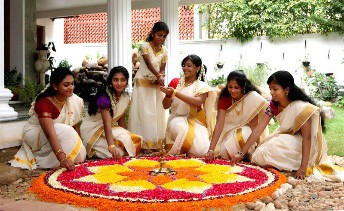
| Pongal/Makar Sankranti | Pongal is a harvest festival celebrated in South India, while Makar Sankranti is celebrated in various parts of India to mark the transition of the sun into the zodiac sign of Capricorn. Kite-flying is a popular tradition during this festival. |
| Lohri | Lohri is celebrated primarily in North India, especially in Punjab, to mark the end of winter and the arrival of longer days. People gather around bonfires, sing folk songs, and distribute sweets. |


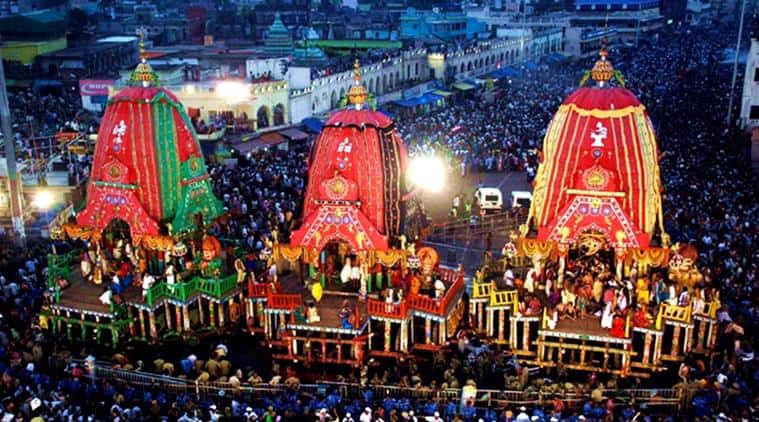

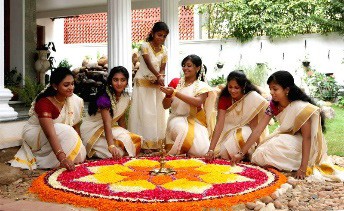
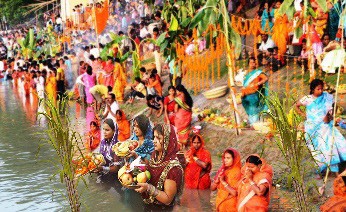


FAIRS OF INDIA

India is a place of celebrations. People find reasons to celebrate life all year round. Even the festivals and fairs held here are related with some important life lessons and ideals. Throughout the year, many fairs are held in practically every section of the country. These fairs are held for a variety of reasons, including religious celebrations, animal trading, and the display of art forms. So, let’s have a look at some of India’s most famous fairs –
Kumbh Mela
The Kumbh Mela is the world’s biggest peaceful gathering of pilgrims, with people bathing or taking a dip in a sacred river.
Devotees believe that washing in the Ganges cleanses one of sins, freeing one from the cycle of birth and death.
Millions of people arrive without being invited. Ascetics, saints, sadhus, aspirants-kalpavasis, and guests make

up the congregation. However, the primary bearers are either members of religious institutions like ashrams and akhadas or are those who depend on alms.


The Kumbh Mela has a significant spiritual impact on Indians as a whole and mesmerizes them.
The event is incredibly knowledgeable since it encompasses the study of astronomy, astrology, spirituality, ceremonial traditions, and social and cultural norms and practices.
Where is the fair held?
The festival is held at Prayagraj, Haridwar, Ujjain and Nasik every four years by rotation and is attended by millions of people irrespective of caste, creed or gender.
According to Hindu mythology, during the Samudra Manthan (the churning of the ocean), Amrit, the drink of immortality, was made and preserved in a Kumbh (pot). While carrying the Kumbh during the fight between the Devas and the Asuras, Lord Vishnu dropped drops of Amrit. These are the four locations where the Kumbh mela is hosted is held every sixth year.
| PLACE | RIVER |
| Prayagraj (Uttar Pradesh) | At the confluence of the Ganga,Yamunaand mythical Saraswati |
| Haridwar (Uttarakhand) | Ganga |
| Nashik-Trimbak (Maharashtra) | Godavari |
| Ujjain (Madhya Pradesh) | Shipra |
When is the mela held?
The Mela is conducted every 12 years at any particular location.
The precise dates are decided by the zodiac placements of the Sun, Moon, and Jupiter.
• Simhastha Kumbh is celebrated in Nashik and Ujjain when a planet is in Leo (Simha in Hindu astrology).
• The Ardh Kumbh is held at Haridwar and Prayagraj
every sixth year.
In 2017, Kumbh Mela was inscribe on the Representative List of Intangible Cultural Heritage of Humanity by UNESCO.
The Mahakumbha 2025
• The Maha Kumbh 2025 witnessed an unprecedented gathering with over 66.30 crore devotees at Sangam in Prayagraj.
• It has made a Guinness World Record in Ganga Cleaning Drive and Mass Cleaning Initiative, where a record breaking 329 and 19,000 individuals, respectively
Sonepur Mela
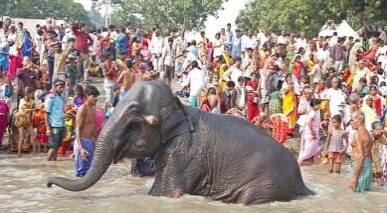
• Sonepur Cattle Fair is celebrated on Kartik Poornima (the full moon day) in November and December in Sonepur, Bihar, near the confluence of the Ganges and Gandak rivers.
• It is also known as Harihar Kshetra Mela. It is the largest cattle fair in Asia, held for 15-30 days.
• It was historically started during Vedic period.
Pushkar Mela
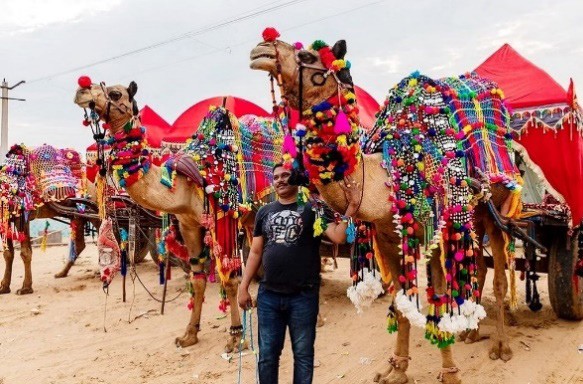
• The Pushkar Fair, or Pushkar Mela, is the world’s largest camel fair, held during the “Kartik Purnima” full moon in Pushkar, Rajasthan.
• It is one of the country’s largest traditional “melas,” attracting about 11,000 camels, horses, and livestock. approximately the course of fourteen days, this gigantic event gathers approximately 400,000 people.
• Competitions like ‘matka phod,’ ‘longest moustache,’ and ‘bridal competition’ bring a big crowd.

• The exhibition cricket match between the Pushkar local club and a squad of international tourists is a new element to this festival.


Chitra Vichitra Fair

• The Chitra Vichitra Fair is a tribal fair conducted annually in northern Gujarat.
• The fair is a gathering for families who have lost a member in the previous year to mourn the deceased, complete with activities and matchmaking.
• The fair is held a fortnight after Holi, around the month of March-April. It starts on the eve of the new moon (called Amavas), the time when the wheat crop is ready for harvest.
• The name of the fair is derived from two brothers Chitravirya and Vichitravirya, sons of King Shantanu, and step brothers of Bhishma, from the story of the Mahabharata. There is a belief that they had settled here and were cured of their diseases by the waters of this site.
Gangasagar Mela
• The Gangasagar Mela is a mela held every year at Gangasagar, West Bengal, India.
• The mela is held every year on Makar Sankranti at Kapilmuni’s ashram located on the Gangasagar.
• The mela is celebrated on 14 or 15 January every year.
Some other famous fairs are given below:
Ambubachi Mela
• It is annual Hindu mela held at Kamakhya Temple in Guwahati, Assam.
• It is the celebration of the yearly menstruation course of goddess Kamakhya.
• This yearly mela is held during the monsoon season, which falls during the Assamese month Ahaar, around the middle of June, when the sun transits to the zodiac of Mithuna and the Brahmaputra River is in flood.
Baneshwar Fair
• The Baneshwar fair is an annual tribal event in Dungarpur, Rajasthan, India, held in January or February near the Som and Mahi rivers.
•
It is a significant cultural event and is often referred to as “the Kumbh mela for the tribals.”
Chandrabhaga Fair
• It is a famous cattle fair held annually at Jhalrapatan, Jhalawar, Rajasthan in Kartik (Oct-Nov) month.
Nauchandi Fair
• The Nav Chandi Fair, also known as the Nauchandi Fair, is held in Meerut, Uttar Pradesh.
• It is also recognized to be historically significant.
• It is mostly considered as an elite event for cattle dealers, although it is attended by a large number of people and their animals, creating a lively environment.
Surajkund Handicrafts Mela
• Surajkund Crafts Mela is one of the largest crafts fairs in India that is held every year in the Surajkund district of Haryana.
• Even several tourists from the world over arrive at the Surajkund Crafts Mela every year to witness the glorious culture and heritage of India.
• Surajkund Crafts Mela is an annual event that is organized on a large scale by Haryana Tourism from 04th to 25th February.
• The fair is aimed at bringing to light the enormous talent of artisans and craftsmen in India who display their exquisite handlooms and handicrafts before a large audience at the fair.
Desert Festival
• The Desert Festival of Jaisalmer displays the finest of Rajasthan’s lifestyle and culture, attracting a huge number of local and international tourists.
• It lasts three days and includes turban tying competitions, camel racing, and other cultural activities.
• Rajasthani men and women bring their past to life through singing tales of heroism, passion, and sorrow.
Rann Utsav
• Rann Utsav, held every year at Dhodro village in Kutch district, celebrates Gujarat’s ethnic culture and colors.
• It is held in the enormous white salt desert known as the Rann of Kutch and is highlighted by a number of events that keep tourists delighted.
• This event offers a unique blend of sightseeing, adventure, and entertainment, ranging from astronomy to sightseeing.
Shamlaji Fair
• The Shamlaji Melo, also known as the Kartik Purnima fair, is held every year in November and lasts around two weeks.
• The Shamlaji Temple is a well-known Vaishnav Shrine, and the deity housed here has several titles,

including Gadadhar (carrier of the mace) and Shaksi Gopal.
• This celebration attracts devotees from numerous castes and communities, including the Garasias and Bhils.
• These pilgrims arrive in groups, singing devotional songs and carrying religious flags, to see the god at the Shamlaji Temple.
• The fair is especially popular with the Bhil tribes, who venerate Shamlaji, also known as ‘Kalio Bavji’ - the black divinity.
• The Shamlaji mela is famed for the Nagdhara kund bath and the centuries old traditions.
Tarnetar Mela
• It is held annually at Tarnetarin Saurashtra.
• It coincides with the festival at the Trineteshwar temple, celebrating the wedding of Arjuna with Draupadi.
• It arranges marriage meets for the local tribes:
• Kolis
•
Bharwad and
• Rabaris.
Poush Mela
• Poush Mela is an annual fair and festival that takes place in Santiniketan, in Birbhum District in the Indian state of West Bengal, marking the harvest season.
Sodal Mela
• It is one of the most important fairs in Punjab, and it is held to honor Baba Sodal, a wonderful soul.
• The Mela is held in Jalandhar every year in the month of Bhadon (September).
• This day is considered particularly favorable by Sikhism adherents.
Mahavirji Fair
• It is held in March or April and is one of the largest Jain community fairs in Rajasthan.
• On this day, tradition has it, a cowherd uncovered Mahavirji’s sacred statue.