Indian Initiatives
CSIR has launched the Indigen Project which aims to do the whole genome sequencing of 1000 Indian individuals representing diverse ethnic groups.
DBT: Genome India Project: 10000 genetic samples from citizens across India to build a reference genome
Why is the government of India doing its own genome sequencing? Why did we withdraw from the HGP read function
The countries involved in the HGP are the rich, developed and advanced countries. Their Genome Sequencing might not reveal things that are more relevant for India’s populations. Think about Tuberculosis. India has more than 27% of TB cases of the world. This disproportionate burden exists because these Global North Countries only spend money on those diseases which affect their populations. For TB, a Vaccine called as BCG was made by these countries. But since India has more TB strains due to a tropical weather, this vaccine is less effective in India. The Global North has no interest in development of TB Vaccine for the tropical countries because it does not affect their populations as much. The BCG Vaccines works just fine in higher latitudes. Thus, if India did not launch its own programmes and plans to deal with the TB problem such as the TB Mukt Bharat Abhiyaan, we would be dependent on these Global North countries. This would harm our self-reliance (aatmanirbharta). Similar reasons apply in the case of Genome Sequencing.
Other Applications of Biotechnology
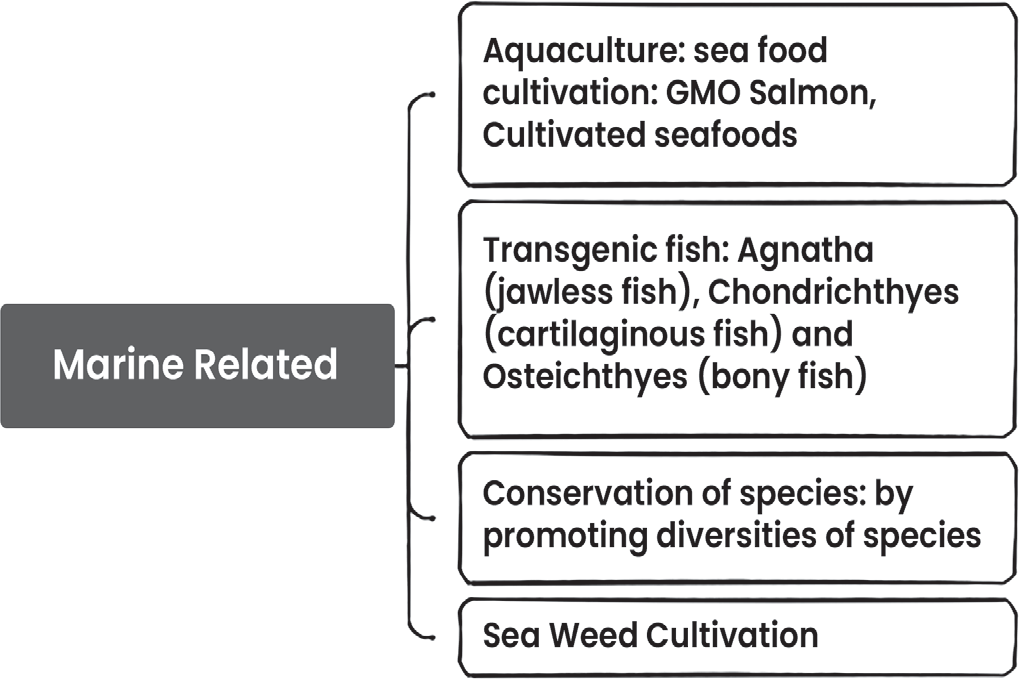
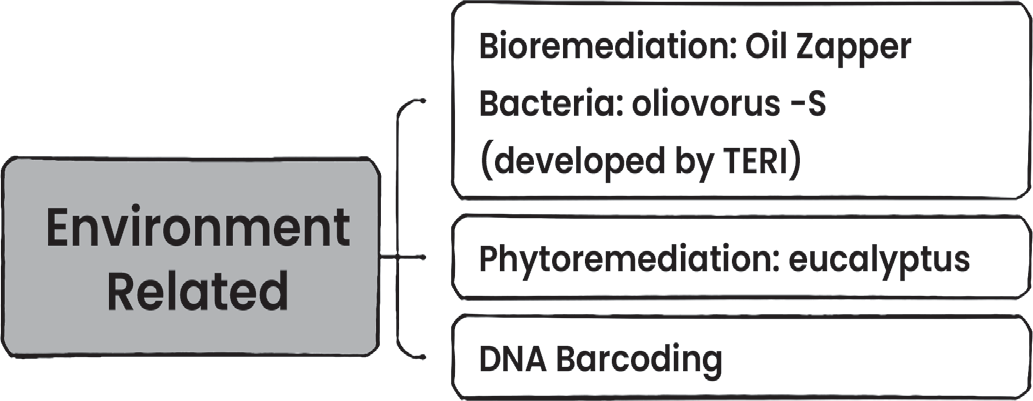
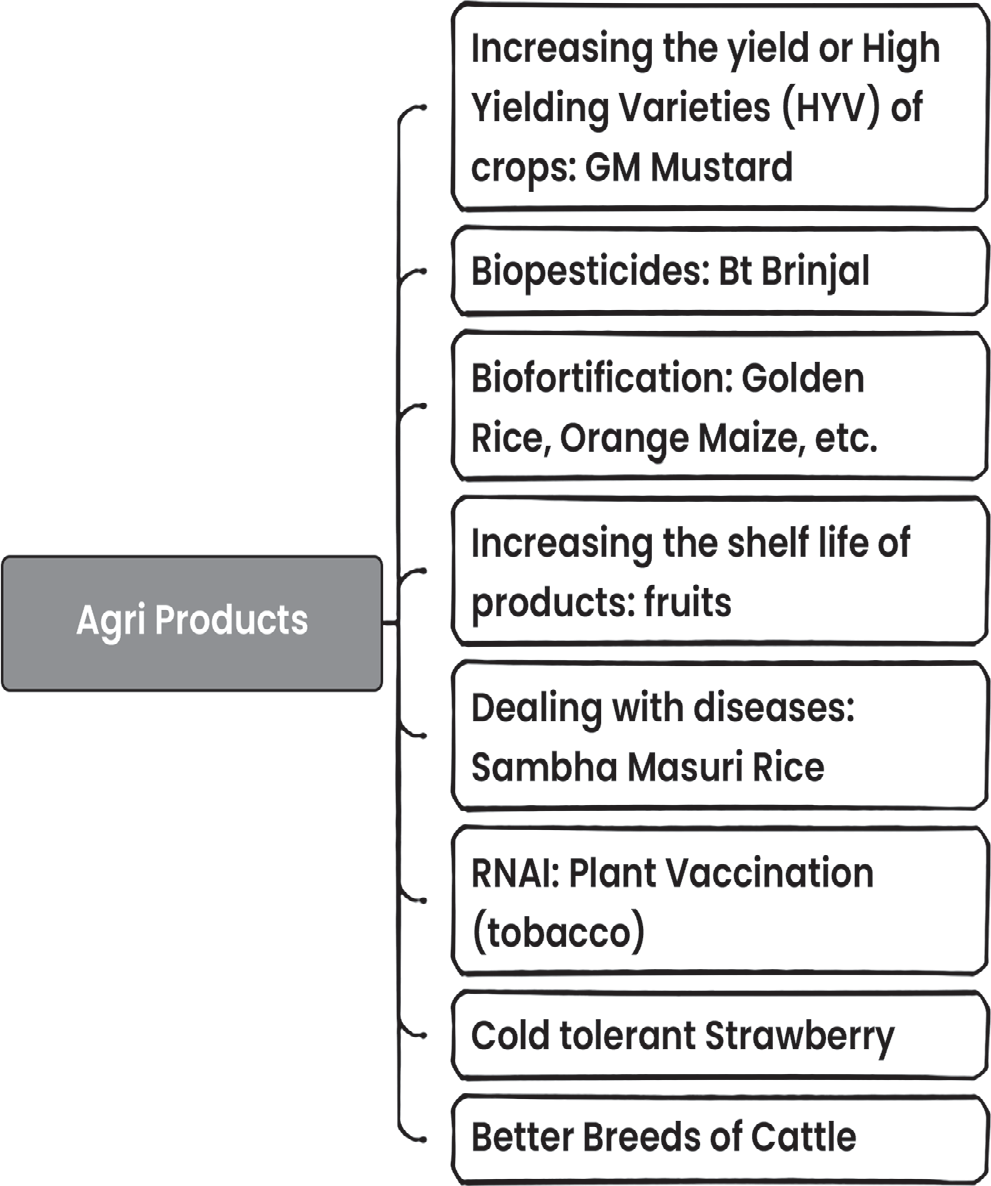
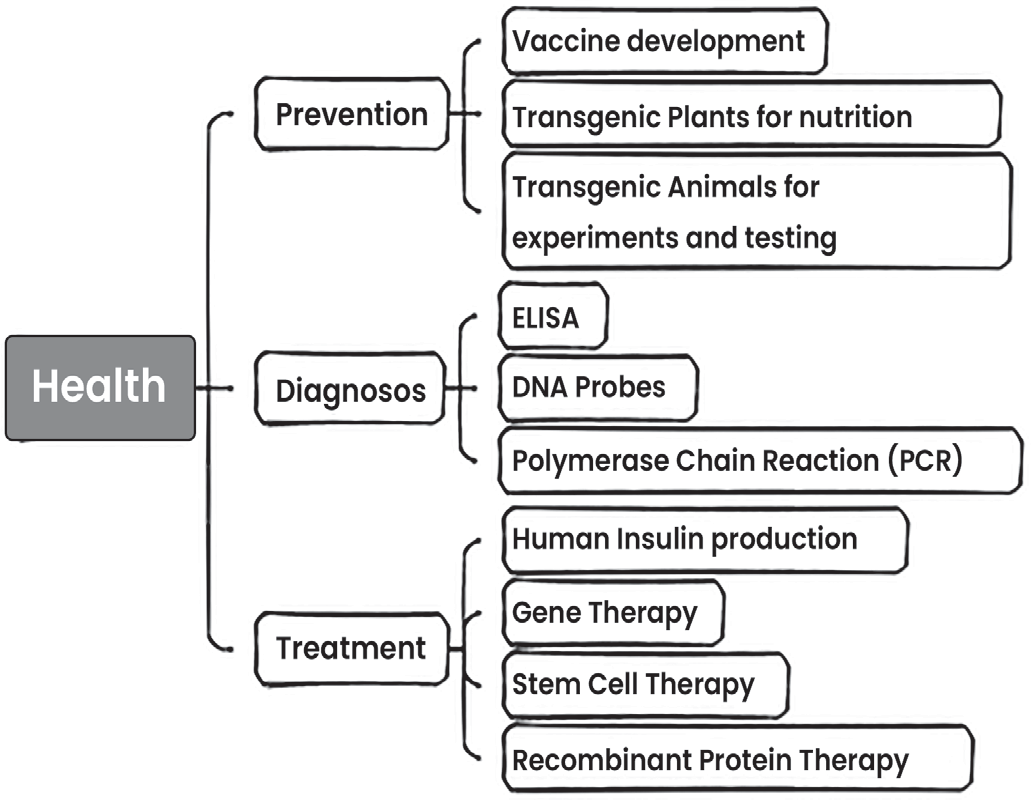
GM Technology Regulation in India
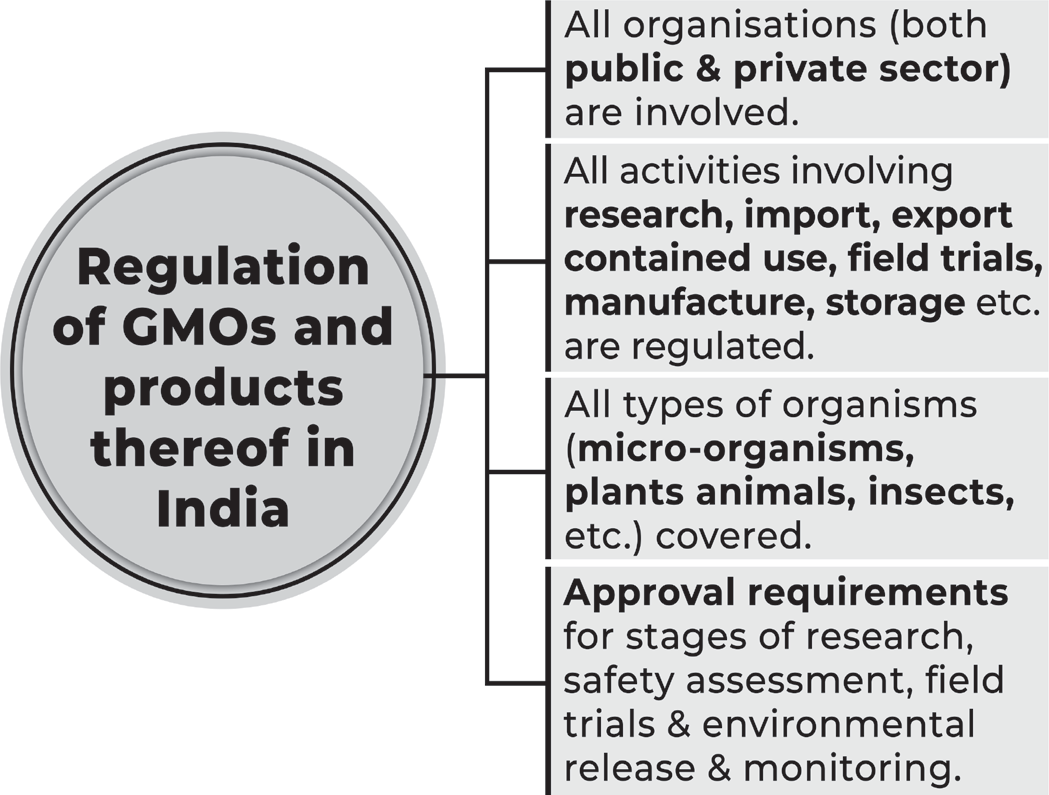
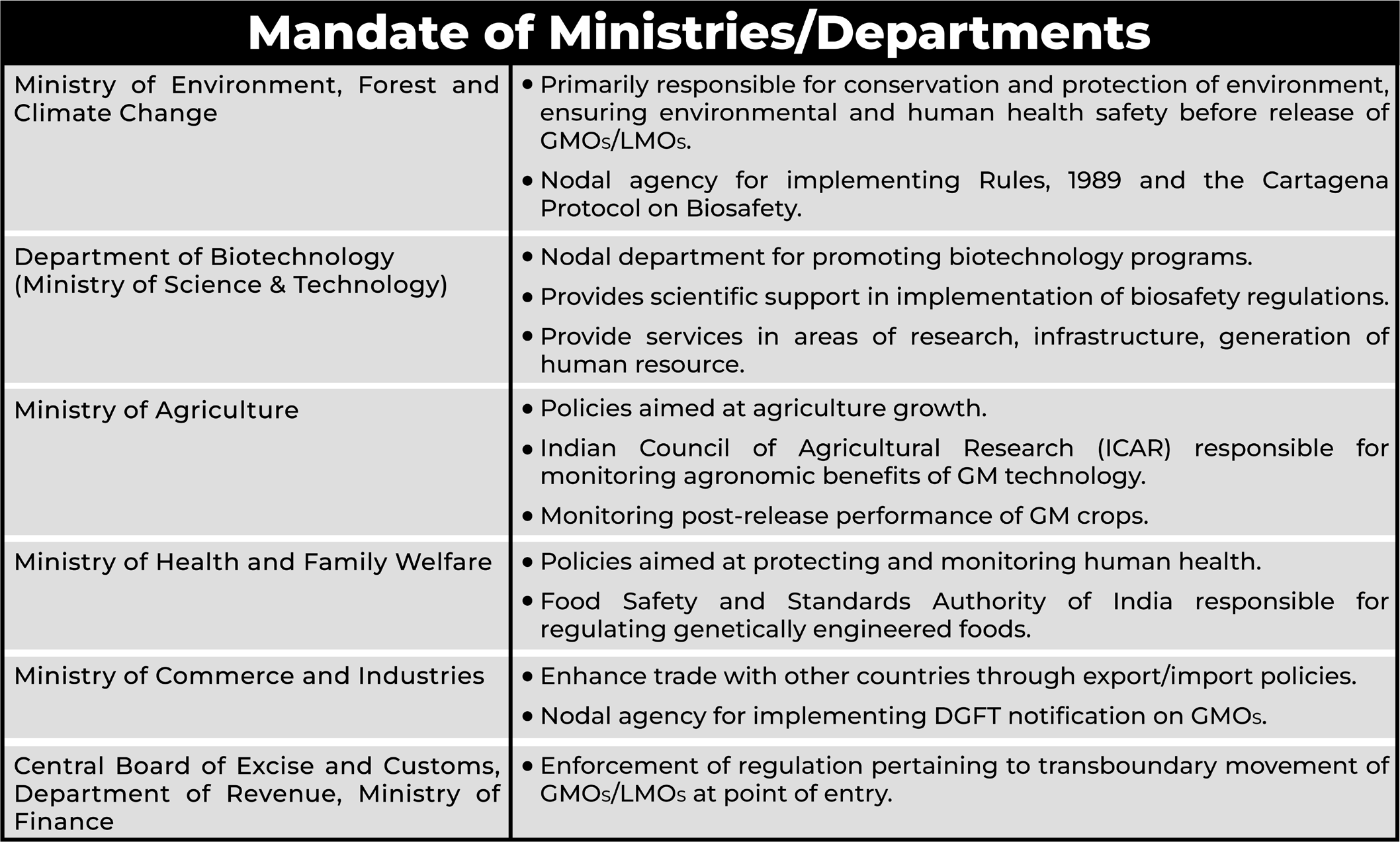
The regulatory framework for GM technology was initiated in India in 1989 in response to the commencement of research and development in biotechnology in India. In India, the Environment Protection Act 1986 is an umbrella legislation implemented by the Ministry of Environment, Forest and Climate Change that provides a holistic framework for protection and improvement of the environment. Pursuant to certain sections of the act, the Rules for the Manufacture/Use/ Import/Export and Storage of Hazardous Microorganisms, Genetically Engineered Organisms or Cells (also known as Rules, 1989) were notified under the EPA, 1986.
Rules, 1989
These are very broad in scope and cover a wide range of activities-
• Manufacture, import and storage GMOs, cells, any substances and products of which these GMOs may be a part of or have contributed to the development of New Gene Technologies in addition to cell hybridization and genetic engineering
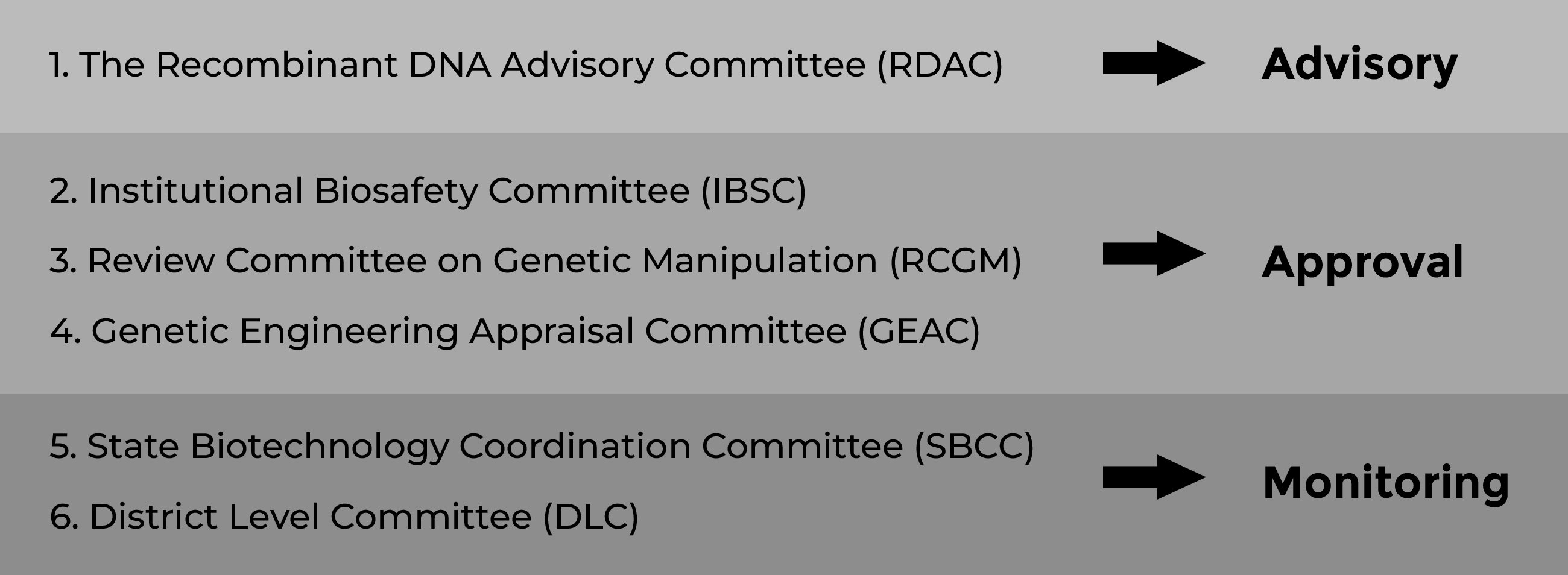
• These rules are implemented by MoEFCC, the Department of Biotechnology, Ministry of Science and Technology and Government of India and respective State Governments. Six competent authorities have been notified under these rules-
Biotechnology Regulatory Authority of India - The Biotechnology Regulatory Authority of India (BRAI) was proposed in 2013 by the Biotechnology Regulatory Authority of India Bill, 2013 to regulate modern biotechnology products and organisms. It oversees research, transport, import, containment, environmental release, manufacture and use. BRAI's regulatory approval is granted through a multi-level assessment process by scientific experts. The BRAI certifies the product's safety for its intended use, while all other laws apply. A Biotechnology Regulatory Appellate Tribunal will hear civil cases and appeals on BRAI's decisions. Penalties include providing false information, conducting unapproved field trials, obstructing or impersonating BRAI officers, and violating other provisions of the Bill.