Indo-Greek Relations:
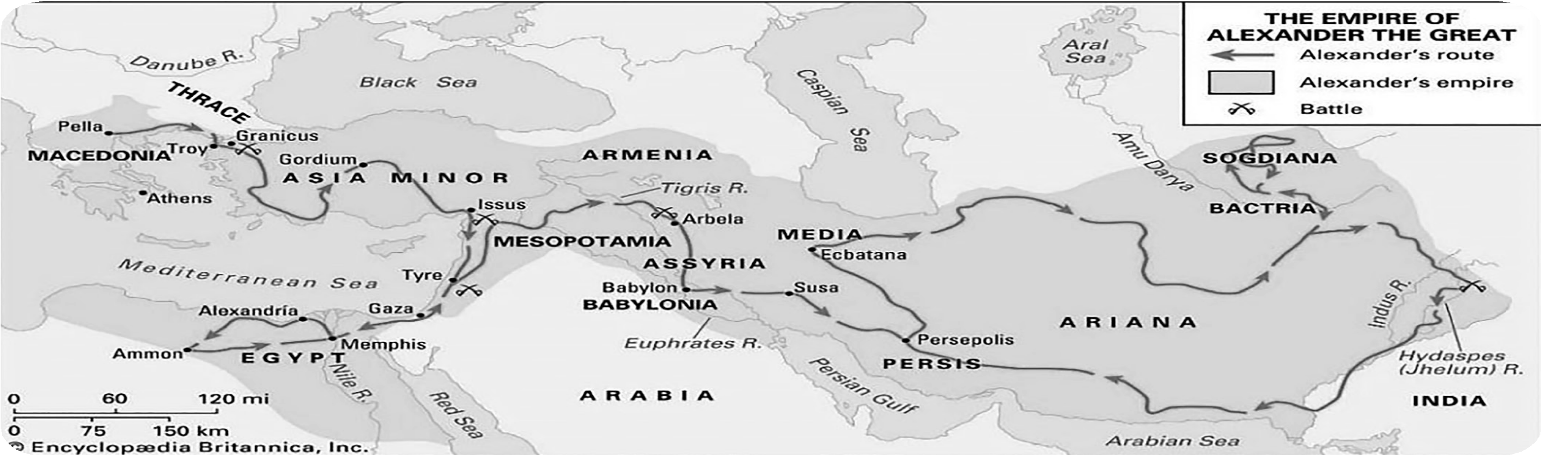
In 327-325 BCE, Alexander invaded north-western India.
• Indians came into contact with the Greeks with this invasion and the term ‘Yavana’ was used for Greeks, which was used throughout India.
• Alexander did not cross the Beas River because his soldiers refused to fight a vast army of Dhana Nanda.
• Chandragupta defeated the Selucus Nicator and made a peace treaty.
• Megasthenes was an ambassador of Selucus Nicator who visited Chandragupta Maurya’s reign.
• Bindusara (son of Chandragupta Maurya) maintained friendly relations with the Greeks.
• Ashoka’s 13th rock edict also mentioned the relations with the Greeks and the regular interchange of ambassadors that used to happen between both countries.
• Pataliputra monuments and sculptures showed the influence of the Greeks.
• The detailed administrative structure of the Mauryan empire including monuments and sculpture was also influenced by the Greeks.
• Diodotus and Demetrius were prominent Indo- Greek kings. In their era, trade between the two countries became enhanced.
• Menander was another Indo-Greek king. He ruled in the northwest region of the country. His coins were found all over India. He attacked Patliputra successfully but retracted later.
• ‘Milinda Panha’: The text contained a question-and- answer discussion on Buddhism between Meander or Milind and his teacher Nagasena or Nagarjuna.
• Menander became Buddhist and promoted Buddhism.


113