INDO-ISLAMIC ARCHITECTURE
The second battle of Tarain (1192 AD) resulted in the defeat of Rajputs and thereafter, the Turks started coming into India. These Turks brought various new forms and features of art and architecture to India. With the passage of time, a number of Indian elements got assimilated into the Islamic architecture.
| TRADITIONAL INDIAN ARCHITECTURE (Trabeate Style) | ISLAMIC ARCHITECTURE (Arcuate Style) |
| It was characterised by the use of columns, beams and flat roof. In this style, the size of monuments was moderate. In Indian style, the ornamentation was carried out by using sculptures, geometrical designs,cornices, paintings and floral designs. | It was characterised by the use of arches, domes and minarets. In Islamic style, the ornamentationwas carried out by using coloured marble stone, Kufi (Inscribing verses of Quran in Arabic on walls) and Arabesque (Intricate and intertwining patterns inspired by nature). |
Evolution of Indo-Islamic architecture
Initial Phase: Islamic monuments were built by using Old Material, procured from the existing Indian structures. Example: The mosque ‘Quwwat-ul-Islam’ was constructed by Qutb ud-Din Aibak by using the material procured from 27 Jain and Hindu temples.
Some important points related to the Indo-Islamic Architecture
In early Islamic monuments, the corbelled arch was used, however later on true/scientific arch came to be used. Example In Balban’s tomb, the true arch was used.
The technique of laying bricks as Headers and Stretchers was invented during Khilji Period.
During initial phase, a single dome was used in the construction of monuments. However, during Lodi period, Double Dome began to be used. Example: Use of double dome in the tomb of Sikander Lodi (New Delhi).
Note: The use of double dome became a common feature of architecture during the Mughal period. Example: Double Dome in Tajmahal (Designed by Ismail Khan Rumi).
• Use of white Marble: Qutub Minar (1st time but in small quantity)
Alai Darwaza (relatively more use of white marble) Humayun’s Tomb (Use of white marble in large quantity) Taj Mahal (Constructed entirely with white marble).
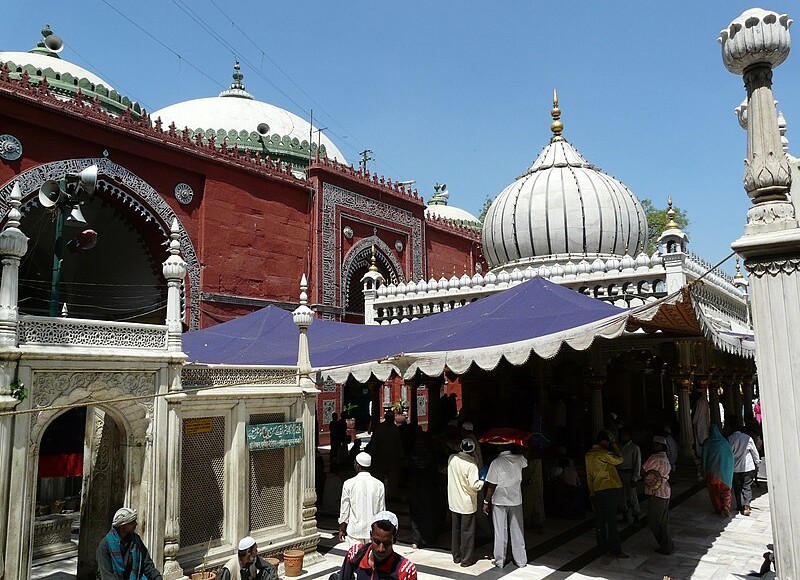
Jamat- i-Khana Mosque (Also known as Khilji Mosque), Delhi

Quwwat-ul-Islam Mosque, Delhi
Later Phase: Islamic monuments began to be constructed by using Fresh Material. Example: Jamat-i-Khana Mosque, built by Khizr Khan (son of Sultan Alauddin Khilji).

Evolution of Ornamentation Techniques

Corbelled a rch
Evolution of Ornamentation Techniques
| Initially, use of coloured marble stones, kufi and arabesque. | Gradually, Indian designs such as geometrical designs, floral designs and cornices were adopted. | Paintings began to be used (During the reign of Akbar) | Pietra Dua Technique was adopted from Persia. Examples: use of Pietra Dua in the Tomb of Itimad-ud-Daulah and Taj Mahal. |

Tomb of Itimad-ud-Daulah, Agra, Uttar Pradesh

Tomb of Balban, Mehrauli use of True Arch

Tomb of Humayun, Delhi
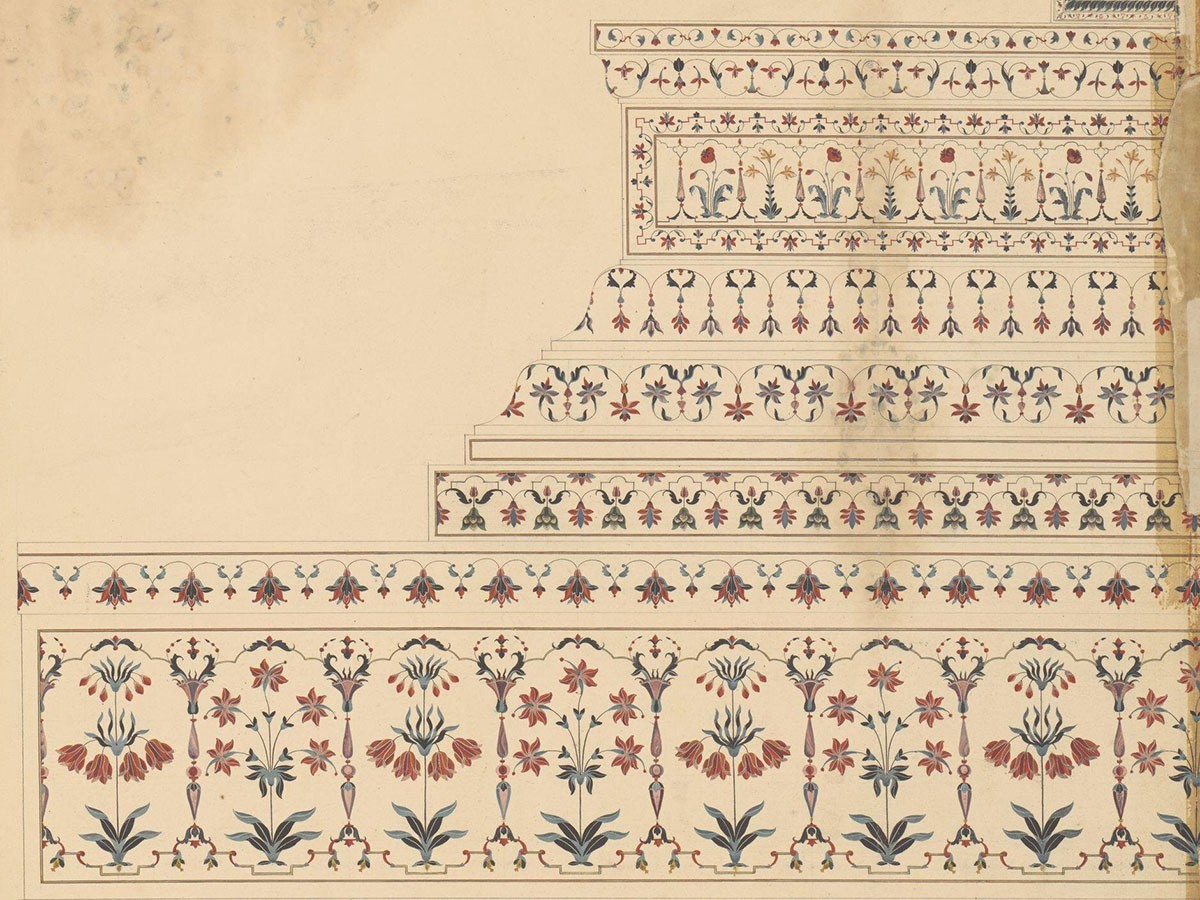
Pietra dura Ornamentation
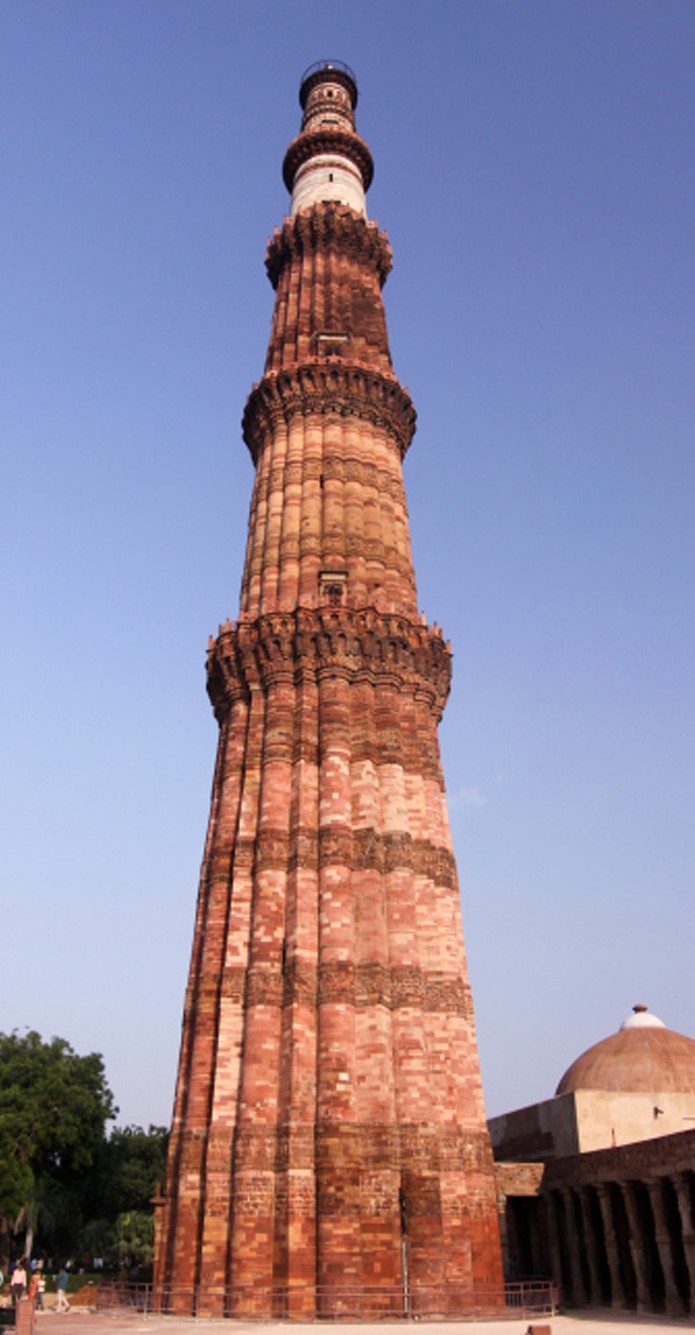
Qutub Minar, Delhi