NAVRATNAS OF AKBAR
Abul Fazl

• Authored the Akbar Nama.
• Knowledgeable in Arabic, Persian, Greek philosophy, and Sufism.
• An independent thinker, opposed conservative ulama views.
• Shaped and articulated ideas associated with Akbar’s reign.
Faizi
Renowned lyrical poet, known for ghazals reflecting love and philosophy.
Proficient in writing and profound scholarship.
Achieved the poet-laureateship, won Akbar’s favour and accompanied him on expeditions.
His birth name was Shaikh Abu al-Faiz ibn Mubarak, but he is best known by his pen name, Faizi. A renowned poet laureate, he was the brother of Abul Fazal.
Akbar honored him with the title of Malik-ush-Shu’ara (Court Poet).
Faizi translated the Sanskrit mathematical work Lilavati by Bhaskaracharya into Persian.
Tansen
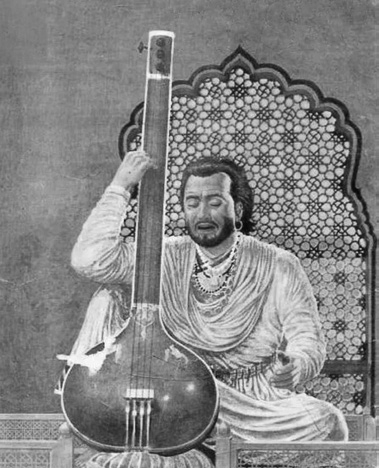
Tansen was a renowned court musician in the darbar of Raja Ram Chandra of Bandavagarh (Rewa).
He was given the title "Tansen" by Raja Vikramjit of Gwalior.
Revered as the "Sangit Samrat" (Emperor of Music), Tansen’s legacy is highlighted in Musical Heritage of India by Lalita Ramakrishna.
He composed several dhrupads in praise of gods like
Ganesha, Shiva, Parvati and Rama.
Additionally, he wrote songs dedicated to his royal patrons.
His work Kalpadruma contains 300 of his dhrupads in the Gauhar Bani style.
Some of the iconic ragas created by Tansen include
Multani, Bhairavi and Todi.
When Akbar heard of Tansen's extraordinary musical talent, he sent a firman to the king of Rewa to bring him to his court. Tansen was then honored as one of Akbar's Navaratnas and was given the title of 'Mian'.
Birbal
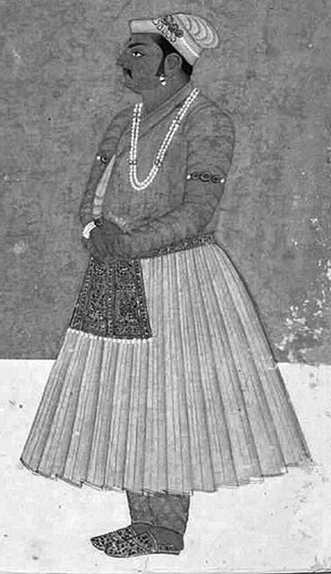
Birbal was renowned for his clever stories with Akbar, demonstrating both wit and intelligence.
He held the position of the court jester in Akbar’s court.
His real name was Maheshdas, and he earned the title "Raja Birbal" from Akbar.
A skilled poet, singer, and scholar, Birbal was fluent in Sanskrit, Persian, and Hindi.
• He also served Akbar in military and administrative capacities.
• Birbal met his end in battle while suppressing unrest among the Afghan tribes in North-west India.
Todar Mal
• He was the Finance Minister of the Mughal empire during Akbar’s reign and was one of the Navaratnas in Akbar’s court.
• He introduced standard weights and measures, a land survey and settlement system, revenue districts, and officers. This system of maintenance by Patwari is still used in the Indian Subcontinent which was improved by the British and the Government of India.
Raja Man Singh
• Raja Man Singh was the Raja of Amber
• He was a general in Akbar’s army and was the grandson of Akbar’s father-in-law Bharmal.
• He fought many battles including the historic battle of ‘Haldighati’ against Maharana Pratap.
• Served as army commander in Akbar’s forces and council members.
Abdul Rahim Khan-I-Khana
• A Diwan in Akbar’s court, known for Hindi couplets and astrological works.
• He was the son of Bairam Khan, Akbar’s trusted guardian and mentor.
• Known for his Urdu couplets and his books on astrology.
• He translated Babar’s memoirs, Baburnama from the
Chagatai language to the Persian language.
• He wrote two books on astrology- Khetakautukam and Dwatrimshadyogavali.
Fakir Aziao-Din
• An esteemed advisor in Akbar’s inner circle, highly regarded by the emperor.
• He was a Sufi mystic and an advisor.
• He used to advise Akbar on religious matters.
Mullah Do Piaza
• An advisor esteemed by Akbar, included among the Navratnas for intelligence, in competition with Birbal.
• Akbar’s reign was characterized by military triumphs, diplomatic alliances, and innovative religious policies that aimed at fostering inclusivity and tolerance. His Rajput alliances and religious reforms significantly influenced the socio-religious landscape of the Mughal Empire, shaping its ethos and governance