Non-Alignment Movement
The Non-Alignment Movement (NAM) was a coalition of Third World countries that arose after World War II. Its main goal was to safeguard the newly gained independence and sovereignty of these nations. In its early years, NAM played a crucial role in advancing the decolonization process. Additionally, it has been significant in promoting global peace and security.
History and Evolution
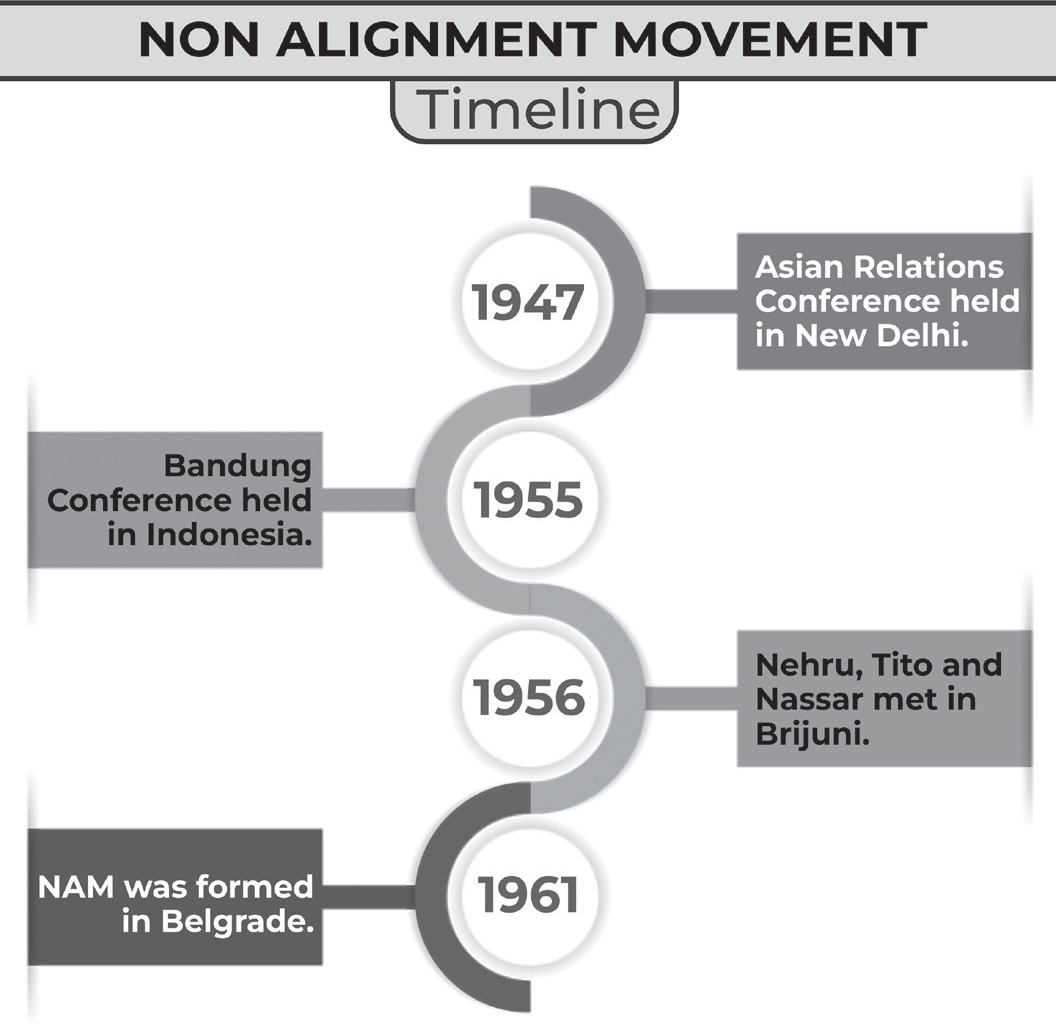
Bandung Conference
• The Bandung Asian-African conference in 1955 is considered as most immediate antecedent to the creation of NAM. The meeting was attended by 29 Heads of states. These belonged to the first post- colonial generation.
• The objective was to identify and assess world issues and pursue joint policies in international relations. There was also another important reason. These countries had newly attained independence.
• Development and increasing standard of living was the main concern for them. Therefore, they did not want to be part of either the Western or Eastern block and become part of the Cold War.
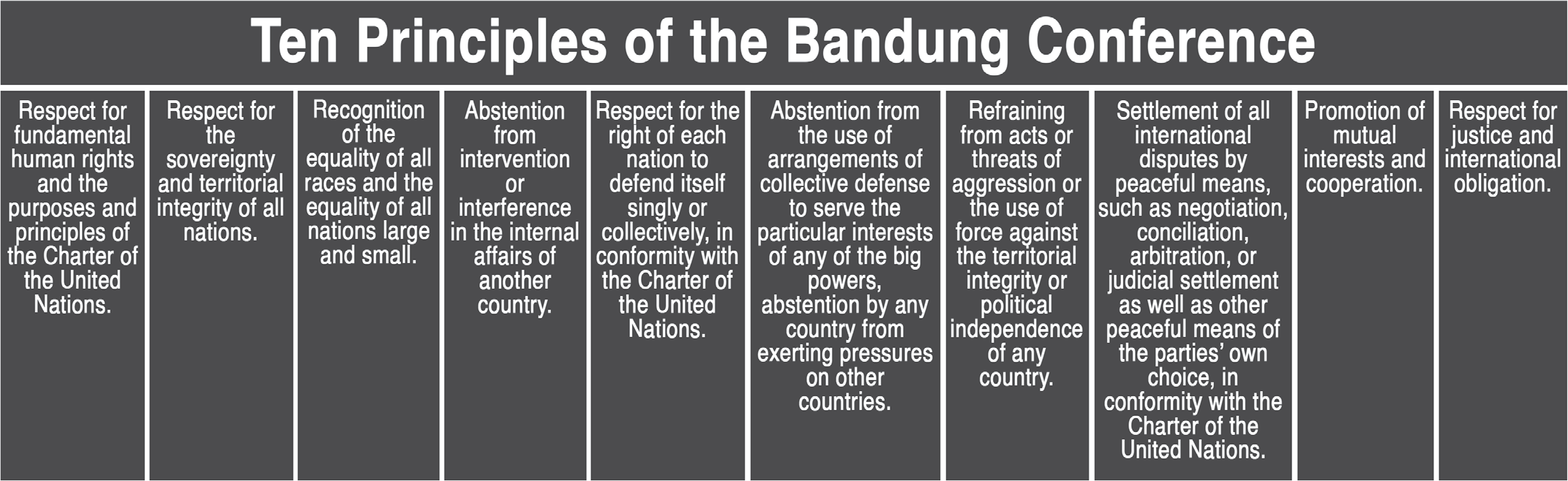
• ‘Ten Principles of Bandung’ were proclaimed at the conference. Such principles were later adopted as the main goals and objectives of NAM.
Belgrade Summit
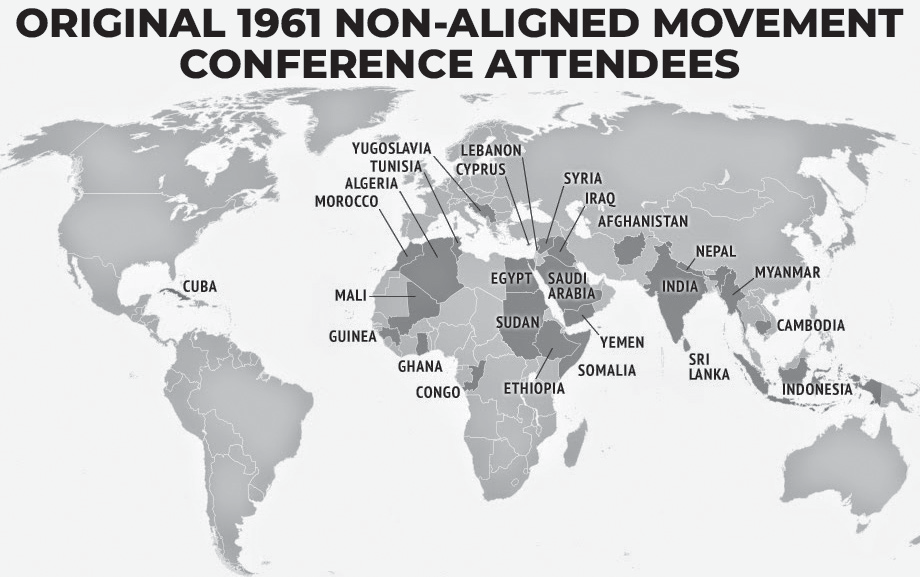
• Six years after the Bandung Conference, the Movement of Non-Aligned Countries was established at the First Summit Conference held in Belgrade from September 1 to 6, 1961. Delegates from 25 countries across Asia, Africa, Europe, and Latin America (including Cuba) participated in the conference.
The NAM was designated as a ‘movement’ rather than an organization to avoid the bureaucratic complexities associated with formal institutions. It was created to actively engage in international politics and take independent positions on global issues, representing the interests of its member countries.
Early Objectives and Achievements
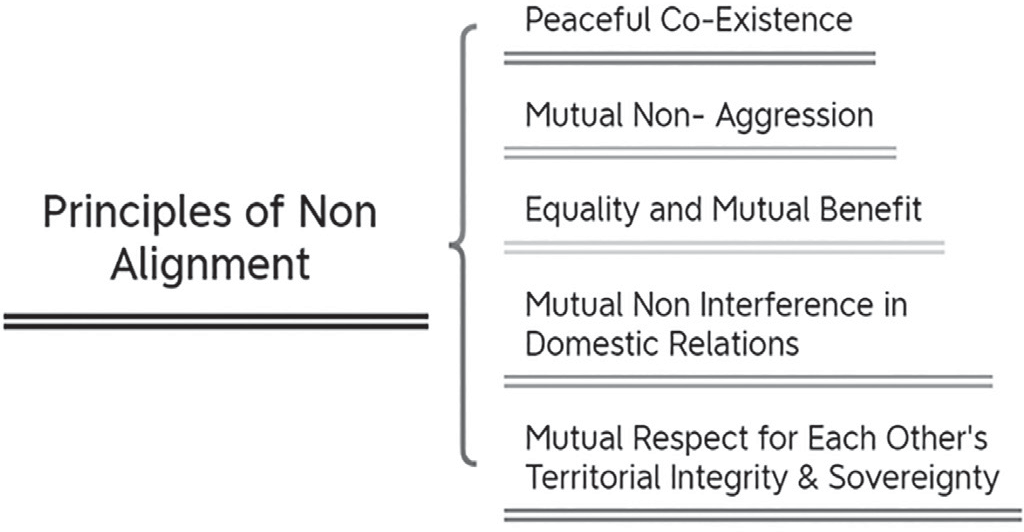
The Primary objective of NAM focused on the support of self-determination, national independence, sovereignty and territorial integrity of states, opposition to apartheid, non-adherence to multilateral military pacts, struggle against imperialism and colonialism, racism, foreign occupation, etc. Strengthening of United Nations, democratization of International Relations, socio-economic development as well as international cooperation on equal footing.
In the 1950s the movement played an important role in support of nations struggling for independence and against colonization. The Third World showed great solidarity under the leadership of NAM. The movement gained considerable diplomatic prestige.
Evolution and Present Status of Movement
During the 1960s and 1970s, the Non-Aligned Movement grew to include nearly all countries in Asia and Africa. The movement's focus also broadened to address the economic and political rights of third-world nations. At the 1973 Algiers conference, the idea of a ‘New International Economic Order’ was introduced.
By the late 1980s, with the end of the Cold War and the collapse of the Socialist Bloc, many believed that the rivalry between opposing blocs was the main reason for NAM’s creation. As a result, scholars began questioning the movement’s continued relevance.
However, the core principles and goals of NAM remain important today. The disappearance of one bloc has not solved global challenges; instead, new issues such as terrorism and climate change have arisen, requiring international cooperation on a global scale.
Challenges before NAM in Today’s Multipolar World
The movement has succeeded in creating a strong front representing countries of the Third World. Current challenges for NAM include protecting international law, eliminating weapons of mass destruction, making the United Nations more effective, and defending Human Rights, Security, Stability, and Justice in the international economic system. Long-standing goals of peace, development, and economic cooperation remain to be realized.
Some other challenges include-
New geopolitical realities: The world has become more multipolar and complex since NAM was founded in 1961. New powers such as China and India are emerging, and traditional powers such as the United States and Russia are competing for influence. This makes it more difficult for NAM to maintain its unity and independence.
Emerging global challenges: NAM member states face a number of emerging global challenges, such as climate change, terrorism, and cyber warfare. These challenges are often transnational in nature and require collective action to address. However, NAM has struggled to develop effective responses to these challenges.
Internal divisions: NAM is a diverse group of countries with a wide range of interests. This can make it difficult to build consensus and take action on common issues. For example, NAM member states have been divided on issues such as the Russia-Ukraine war and the Syrian civil war.
Despite these challenges, NAM remains an important forum for developing countries to voice their concerns and coordinate their actions on global issues. In recent years, NAM has become more active on issues such as climate change and sustainable development. However, NAM needs to address the challenges it faces in order to remain relevant and effective in the 21st century.