Pandyas
Pandyas were one of the dynasties that ruled the southern part of India, though intermittently, until the pre-modern times.
Their flag bears a fish symbol.

• Capital: Korkai, a town historically known for its pearl fisheries, is believed to have been the early capital and port of the Pandyas. Later, Madurai became the capital.
• Numerous early Tamil inscriptions of the Pandyas have been found in and around Madurai. In these inscriptions, Madurai is referred to as Matirai, while Tamil classics call the city Kudal, meaning "assemblage."
• A recently discovered Tamil inscription from Puliman Kompai, a village in Pandya territory, also mentions Kudal.
• Both Pattinappalai and Maduraikkanchi refer to Koodal as the capital city of the Pandyas.
• Sources:
• It finds mention in Ettuthogai (Eight Anthologies) also.
• Travelers like Megasthenes, Marco Polo, Wassef and
Ibn-Battuta have mentioned Pandyas.
• Megasthenes said that Pandyas rule was famous for pearls.
• Sangam Literature was compiled during this era.


• The famous story of Silppadikaram took place during the reign of Nedunjeliyan.
• Trade: Pandyas had trade relations with the Roman empire during the reign of Augustus.
• The early Pandya rulers were Nediyon, Palshalai Mudukudumi and Nedunjeliyan.
• Sadayivarman Sundarapandyan was an illustrious ruler of Pandyan kingdom. He brought all the Tamil Nadu within his kingdom.
• Maravarman Kulashekran was another important ruler.
• Battle of Talayilanganam: Here Chola’s defeated Pandyas and took Chera king as the prisoner.
• After the disappearance of Kalabhras, Pandya’s revival
happened around 600 - 920 A.D.
• The third revival of Pandya’s happened when Chola power became weakened around 1190 - 1310 A.D.
Pandya Dynasty during Sangam Age (Early Pandya Dynasty):
The Pandyas established their supremacy in South Tamil Nadu by the end of the 600 A.D.

Sources of Pandya Dynasty
• The history of the Pandyas during the Sangam period, from around 300 BC to 300 AD, has been reconstructed through various sources, including megalithic burials, Tamil Brahmi inscriptions, and the Tamil poems of Sangam literature.
• Copper plates provide valuable information about royal decrees, genealogies of the kings, their victories over enemies, and the endowments and donations they made to temples and Brahmins.
• The Velvikkudi grant of Nedunjadayan is considered one of the most important among these.
• Rock inscriptions offer insights into the authors of rock- cut cave temples, as well as details about irrigation tanks and canals.
• Accounts from travelers such as Marco Polo, Wassaf, and Ibn Battuta shed light on the political and socio- cultural developments of this period.
•
Madurai Tala Varalaru, Pandik Kovai and Madurai Tiruppanimalai provide information about the Pandyas of Madurai of later period.
Territorial Extent:
• The region ruled by the Pandyas was known as Pandymandalam, Thenmandalam, or Pandynadu. It was characterized by rocky, hilly terrains and mountain ranges, with the exception of the areas nourished by the Vaigai and Tamiraparni rivers. The Vellar River, flowing through the Pudukkottai region, marked the northern boundary of the Pandya territory, while the Indian Ocean served as its southern border.
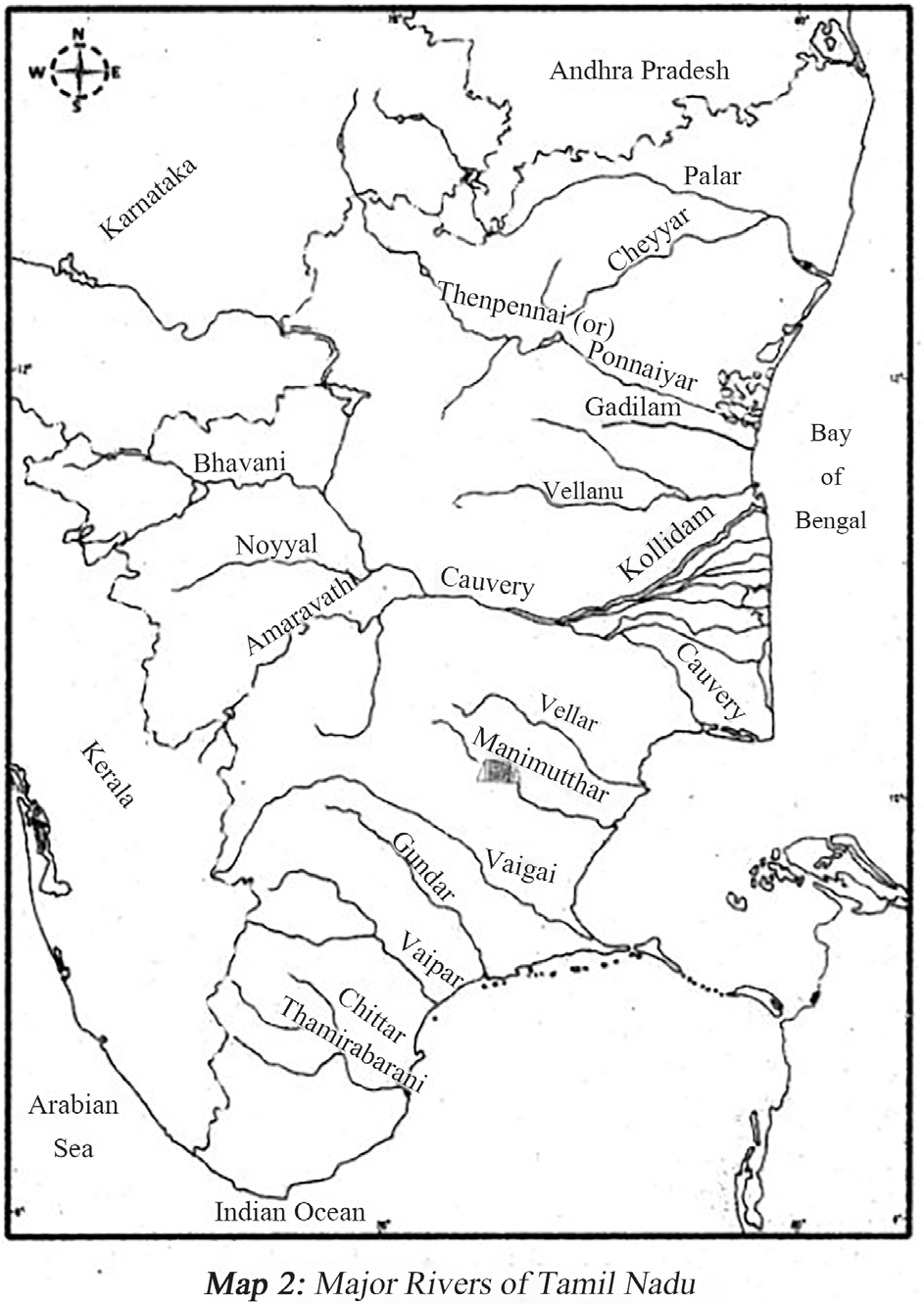
• The Western Ghats remained the border of the west while the Bay of Bengal formed the eastern border.
• Korkai: A famous fishing town in Pandyan kingdom.
• Madurai: the capital was established on the Banks of river Vaigai
• Meenakshi temple was built here.