Post Mauryan Period
The practice of cave architecture in India reached its zenith during the Post-Maruyan Period (200 BC-300AD). The tradition of cave architecture flourished particularly in
eastern India as well as in western India.

Udayagiri and Khandagiri Caves
Note: These caves were in the form of Chaityas and Viharas. Chaitya was a place of worship and Vihara was a place of residence for monks.
Udayagiri and Khandagiri Caves (also Known as Cuttack or Katak Caves)
During this time period, caves were carved out in Udaygiri- Khandagiri Hills (Bhubaneswar, Odisha). The great Kalinga ruler Kharavela (193 BC – 170 BCE) patronised the cave architecture in this region. These caves belong to Jainism.

Udayagiri Caves
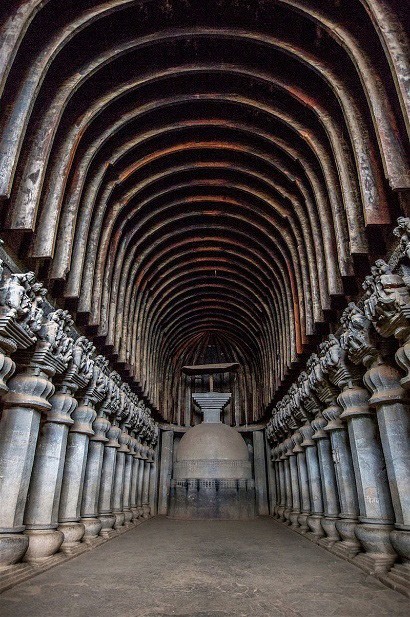
Great Chaitya in the Karla Caves
Cave Architecture in western India during the post- Mauryan Period
A significant number of Buddhist caves were carved out in the western India during this time period under the patronage of the local rulers, traders and merchants.
Ajanta, Karle, Bedsa, Bhaja, Nasik, Junnar, Kanheri, Pitalkhora and Kondana were the most significant centres of cave architecture. These caves are also in the form of Chaityas and Viharas