SNIPPETS FROM NCERTs
HINDUSTAN
The term "India" as we know it today refers to the modern nation-state. However, in the 13th century, the Persian historian Minhaj-i-Siraj used the term to describe the regions of Punjab, Haryana, and the land between the Ganga and Yamuna rivers. He applied the term politically, referring to areas within the Delhi Sultanate's control. The scope of this term expanded or contracted depending on the extent of the Sultanate, but it never included South India. In contrast, by the early 16th century, Babur used the term "Hindustan" to refer to the geography, wildlife, and culture of the subcontinent's people. This was similar to how the 14th- century poet Amir Khusrau used the word "Hind." While the idea of a geographic and cultural entity akin to "India" existed, "Hindustan" in that period did not carry the same political or national implications that we associate with it today.
ABOUT PAPER AND MANUSCRIPTS

Paper in the medieval times was not as easily available. As time progressed paper did become cheaper and allowed for the storage of holy texts, manuscripts, chronicles of the rulers, etc. Since there was no printing press, these manuscripts had to be copied and written by hand. This process of copying produced slight changes which accumulated over time until the later manuscripts became very different from the earlier ones. Different kinds of writing styles also made manuscripts harder to read and understand. Take Persian for instance. The nastaliq style is cursive and easy to read, the shikaste is denser and more difficult.
LANGUAGE AND REGIONS IN MEDIEVAL TIMES
In 1318, the poet Amir Khusrau remarked that each region in the subcontinent had its own language, such as Sindhi, Lahori, Kashmiri, Dvarsamudri (from southern Karnataka), Telangani (from Andhra Pradesh), Gujari (from Gujarat), Ma‘bari (from Tamil Nadu), Gauri (from Bengal), Awadhi (from eastern Uttar Pradesh), and Hindawi (around Delhi). He pointed out that unlike these regional languages, Sanskrit stood apart as an ancient language that was not confined to any specific region. According to Khusrau, Sanskrit was known only by the Brahmanas, and not the common people.
SAMANTAS
By the seventh century, powerful landlords or warrior chiefs had risen in different regions of the subcontinent. These rulers, known as samantas, were often recognized by the reigning kings as their subordinates. They were expected to present gifts, attend court, and offer military support when needed. As these samantas gained wealth and influence, they began taking on titles like maha-samanta or maha-mandaleshvara (great lord of a region), asserting greater authority. In some instances, these chiefs sought to declare their independence from their overlords. Aprominent example is the Rashtrakutas, originally subordinates to the Chalukyas of Karnataka. In the mid-eighth century, Dantidurga, a Rashtrakuta chief, overthrew his Chalukya overlord and performed a ritual called hiranya-garbha (golden womb). This ritual, performed with the help of Brahmanas, was believed to allow a person to be "reborn" as a Kshatriya, even if they were not born into that caste.
DELHI
Delhi became the capital of a kingdom under the Tomara Rajputs, who were later defeated in the mid-twelfth century by the Chauhans (or Chahamanas) of Ajmer. During the rule of both the Tomaras and Chauhans, Delhi grew as a prominent commercial center. Wealthy Jain merchants settled in the city and built several temples. The dehliwal coins minted here circulated widely. The real transformation of Delhi into a capital that governed vast regions began with the foundation of the Delhi Sultanate in the early thirteenth century. The Sultans of Delhi went on to construct numerous cities within what is now known as Delhi.
HISTORIES

In the Delhi Sultanate, historical accounts were referred to as tarikh (singular) or tawarikh (plural), written in Persian, the administrative language of the time. The authors of these historical works were educated individuals, including secretaries, administrators, poets, and courtiers, who not only chronicled events but also offered counsel to rulers on governance, emphasizing the necessity of just leadership. Some key aspects of these authors include:
Most of the tawarikh writers lived in urban areas, particularly in Delhi, and rarely resided in rural regions.
They often composed these histories with the expectation of receiving generous rewards from the Sultans.
Their writings reflected the belief in preserving an "ideal" social structure, based on birthright and gender hierarchies, although not everyone agreed with these views.
WHO WERE THE MUGHALS?
The Mughals traced their ancestry to two powerful dynasties. On their mother's side, they were descendants of Genghis Khan (died 1227), the Mongol ruler who dominated parts of China and Central Asia. On their father's side, they descended from Timur (died 1404), the ruler of Iran, Iraq, and present-day Turkey. Despite this prestigious heritage, the Mughals disliked being referred to as "Mughal" or "Mongol" due to Genghis Khan’s association with mass massacres and his rivalry with the Uzbegs, other Mongol tribes. In contrast, they took great pride in their Timurid lineage, especially because Timur had conquered Delhi in 1398. The Mughals often depicted their genealogy in artwork, with each ruler commissioning a portrait alongside Timur to celebrate their shared heritage.

MUGHAL TRADITIONS OF SUCCESSION
The Mughals did not follow the tradition of primogeniture, where the eldest son inherits the father's estate. Instead, they adhered to the Mughal and Timurid practice of coparcenary inheritance, where the inheritance was divided among all sons. This system led to conflicts among the brothers over succession in later years. These destructive succession wars, combined with the weakening of the nobility, played a significant role in the decline of the Mughal Empire in India.
MUGHAL MARRIAGES WITH THE RAJPUTS
Jahangir's mother, the wife of Akbar, was a Kachhwaha princess, the daughter of the Rajput ruler of Amber (modern-day Jaipur). Shah Jahan's mother, on the other hand, was a Rathore princess, the daughter of the Rajput ruler of Marwar (Jodhpur). In 1611, Mehrunnisa married Emperor Jahangir and was given the title Nur Jahan. She remained deeply loyal and supportive of the emperor throughout their marriage. As a sign of respect and
admiration, Jahangir issued silver coins with his own titles on one side, and on the reverse, the inscription “struck in the name of the Queen Begum, Nur Jahan.”

Akbar receiving the Akbar Nama from Abul Fazl
AKBAR NAMA AND AIN-I AKBARI
Akbar instructed his close friend and trusted courtier, Abul Fazl, to chronicle the history of his reign. Abul Fazl composed a comprehensive three-volume work known as the Akbar Nama. The first volume focused on the history of Akbar’s ancestors, while the second volume detailed the key events of Akbar's own reign. The third volume, titled Ain-i Akbari, provided an in-depth look at Akbar’s administration, his royal household, the military, the empire's revenue system, and its geography. It also shed light on the customs and cultures of the people in his vast empire. One of the most captivating features of the Ain-i Akbari is its extensive statistical data, which covered a wide range of topics such as agricultural production, crop yields, market prices, wages, and tax revenues.
NUR JAHAN’S INFLUENCE IN JAHANGIR’S COURT
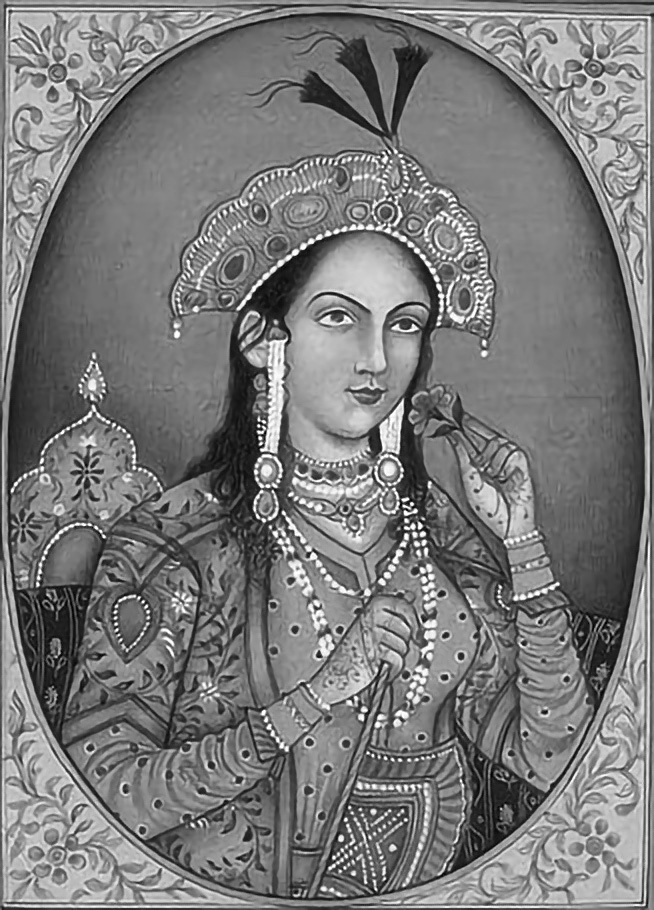
Mehrunnisa married the Emperor Jahangir in 1611 and received the title Nur Jahan. She remained extremely loyal and supportive to the monarch. As a mark of honour, Jahangir struck silver coins bearing his own titles on one side and on the other the inscription “struck in the name of the Queen Begum, Nur Jahan”.
THE CHERAS AND THE DEVELOPMENT OF MALAYALAM
The Chera dynasty, based in Mahodayapuram, was founded in the ninth century in the southwestern region of India, now known as Kerala. Malayalam was probably spoken by the people in this region. The Chera rulers are credited with introducing the Malayalam language and script in their inscriptions, marking an early use of a regional language for official purposes. Alongside this, they also embraced elements of Sanskrit culture and traditions. One notable contribution from this period is the temple theatre of Kerala, which incorporated stories from Sanskrit epics. The earliest literary works in Malayalam, from around the twelfth century, were heavily influenced by Sanskrit. A fascinating fourteenth-century work, the Lilatilakam, focused on grammar and poetics, and was written in Manipravalam, a blend of Sanskrit and the regional language, symbolizing the fusion of the two cultures.

THE JAGANNATHA CULT
In various regions, local cultures evolved around religious practices. A prominent example of this is the Jagannatha cult in Puri, Odisha. The local tribal communities still craft the wooden idol of the deity, indicating that Jagannatha was likely a regional god before being associated with Vishnu. In the twelfth century, Anantavarman, a significant ruler of the Ganga dynasty, took the initiative to build a temple dedicated to Purushottama Jagannatha in Puri. Later, in 1230,
King Anangabhima III pledged his kingdom to the deity and declared himself the "deputy" of the god.
THE GONDS AND GONDWANA
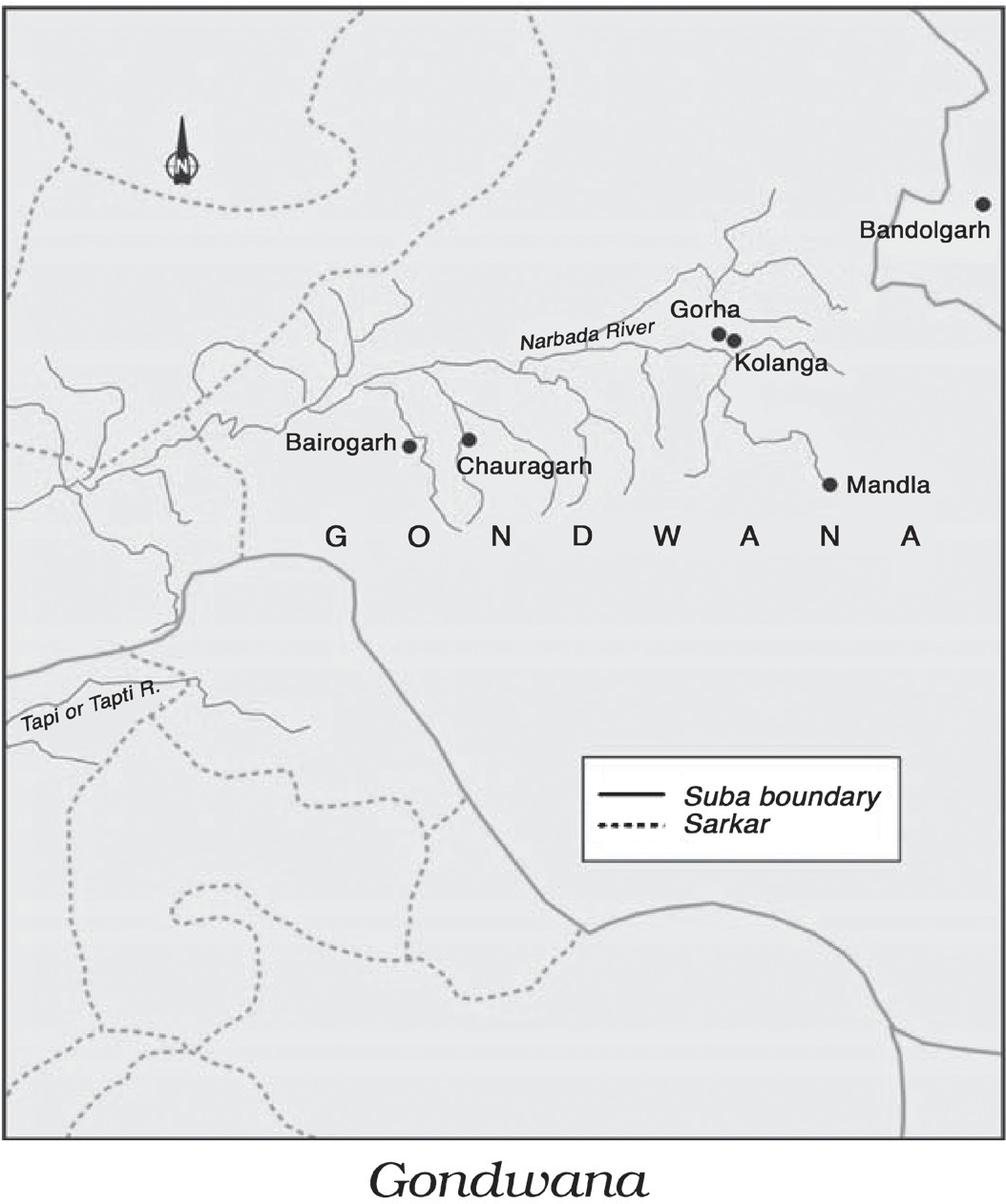
Residing in the expansive forested expanse known as Gondwana, the Gonds practiced shifting cultivation and existed as a sizable tribe, comprised of various smaller clans. Each clan operated under its own raja or rai. As the influence of the Delhi Sultans waned, larger Gond kingdoms began emerging, overshadowing the smaller chieftains.
Rise of Gond Kingdoms
During Akbar’s reign, historical records, like the Akbar Nama, highlighted the prominence of the Gond kingdom of Garha Katanga, boasting an impressive 70,000 villages. The administrative structure of these kingdoms gravitated toward centralization, organized into garhs. Each garh, controlled by a distinct Gond clan, was subdivided into chaurasi comprising 84 villages, further fragmented into barhots of 12 villages each.
Societal Transformation
The ascension of expansive states reshaped Gond society, fragmenting their once egalitarian structure into unequal social classes. Brahmanas gained influence through land grants from Gond rajas. Seeking recognition as Rajputs, Gond chiefs adopted new titles and alliances, exemplified by Aman Das assuming the title ‘Sangram Shah’. Rani Durgawati, a capable leader, ruled for her young son, Bir Narain, expanding the kingdom further.
Conflict and Decline
In 1565, Mughal forces led by Asaf Khan launched an attack on Garha Katanga. Rani Durgawati fiercely resisted but was ultimately defeated, choosing death over surrender. Subsequently, her son also fell in battle. Despite its richness, captured through the trade of wild elephants, the Mughals annexed a portion of the kingdom and granted the rest to Chandra Shah, Bir Narain’s uncle. Though the Gond kingdoms persisted for a while, they eventually weakened, succumbing to later conflicts with the formidable Bundelas and Marathas.
THE AHOMS
Originating from present-day Myanmar, the Ahoms migrated to the Brahmaputra valley and established a new state by suppressing the existing political structure of the bhuiyans, or landlords. Their expansion in the sixteenth century involved annexing kingdoms such as the Chhutiyas and Koch-Hajo, consolidating various tribes into a large state. Remarkably, they adopted firearms by the 1530s and later mastered the production of high-quality gunpowder and cannons by the 1660s.
Challenges and Administration
Despite their formidable state, the Ahoms faced invasions, notably by the Mughals under Mir Jumla in 1662. Despite brave defence, the Ahoms succumbed to defeat. However, direct Mughal control was short-lived. The Ahom state relied on forced labour, with those obligated to serve termed paiks. A centralized administration emerged by the seventeenth century, enforced through population censuses and the redistribution of labour across villages.
Society, Economy, and Religion
Ahom society was organized into clans or khels, with limited artisan castes. Peasants held land granted by their village communities, offering a measure of protection against royal expropriation. The Ahoms innovated in agriculture and engaged in communal projects during peacetime, constructing dams and irrigation systems. Initially worshipping their tribal deities, the Ahoms witnessed a Brahmana influence during the seventeenth century, with Hinduism gaining traction. Though Hinduism predominated during Sib Singh’s reign, the Ahom kings retained elements of their traditional beliefs.
Cultural and Intellectual Flourishing
Ahom society thrived intellectually, supporting poets, scholars, and theatrical arts. Sanskrit works were translated into the local language, while historical chronicles known as buranjis were authored in both the Ahom language and Assamese, preserving their history and culture for posterity