SOUTH INDIAN SCULPTURES
Pallava Sculptures: The Pallava style concerns itself with a tall and slender physiognomical form.
The thin and elongated limbs emphasize the tallness of the figure.
Examples: Mahishasurmardini in relief, Girigovardhanapanel, Arjuna’s penance or
the Descent of the Ganga, Trivikrama Vishnu, Gajalakshmi and Anatasayanam.
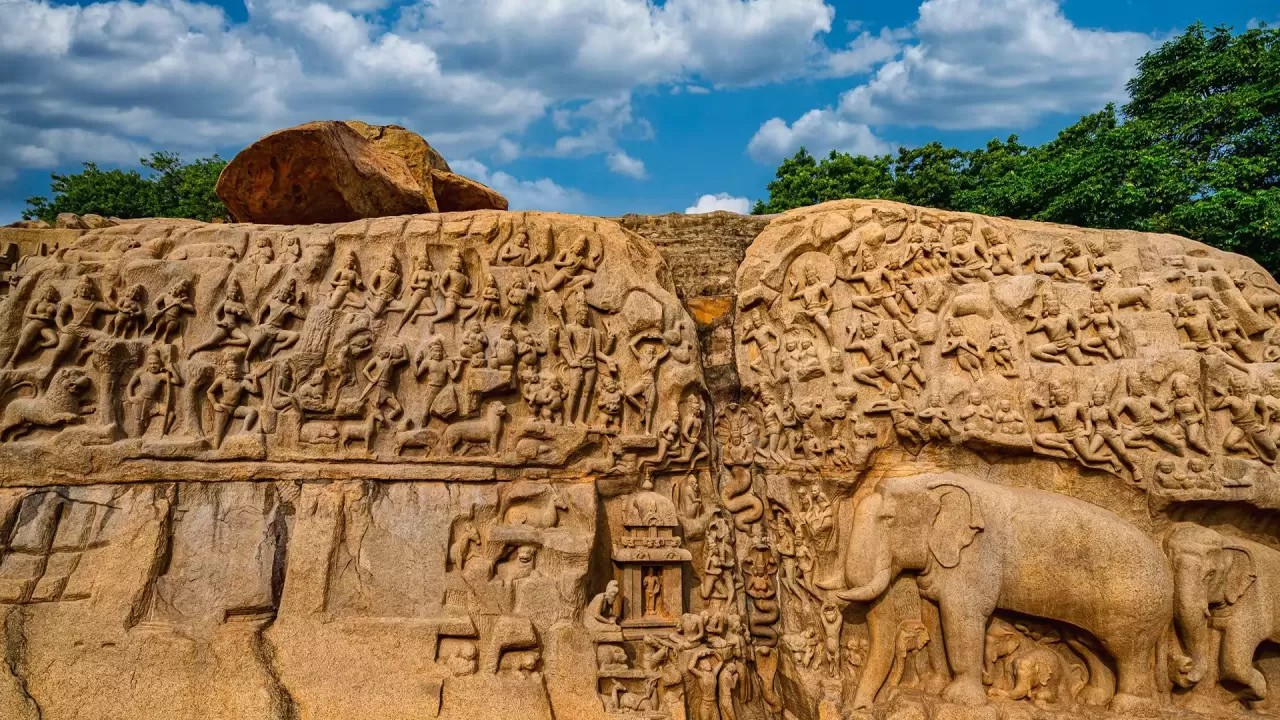
Arjuna's Penance sculptu re at Mahabalipuram
Rashtrakuta Sculptures: In the middle of the 8th century, the Rashtrakutas wrested power from the Chalukyas. They created the greatest wonder of medieval Indian art in their Kailasa temple at Ellora.
Examples: Rock sculpture from Cave No.29 at Ellora shows the marriage of Siva and Parvati and also a panel depicting Ravana shaking Mount Kailasa.
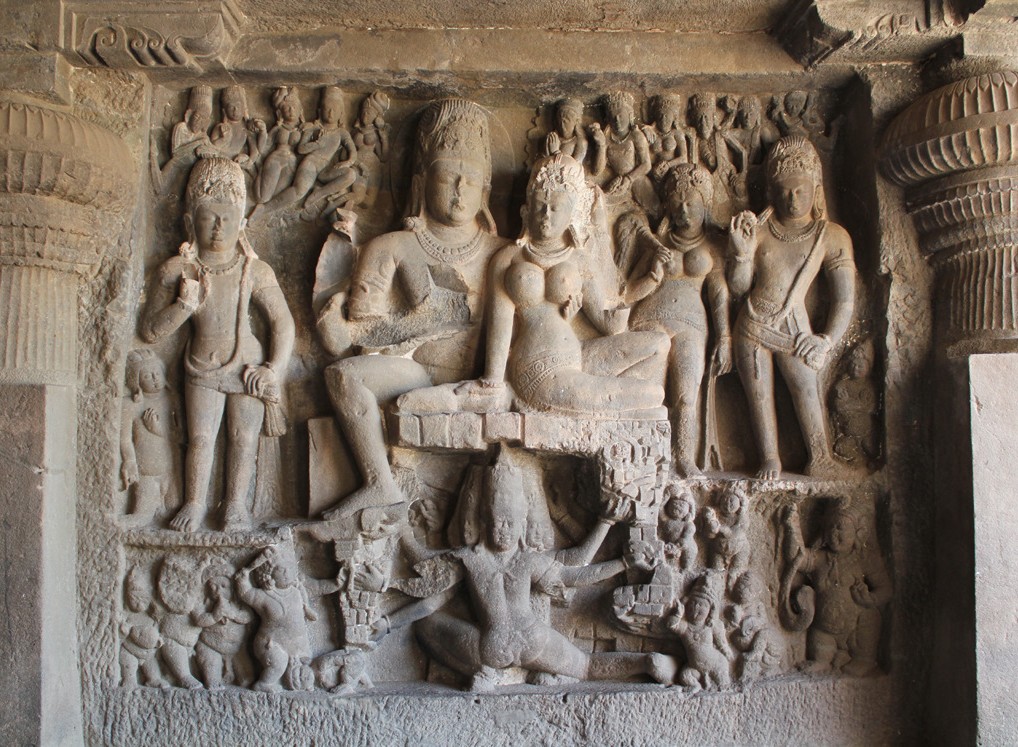
Ravana shakin g Mount Kailasa, Ellora Cave- 29
Chola Sculpture: Brihadisvara temple at Tanjavur is the most mature and majestic of the Chola temples. The sculpture there has attained a new maturity which is evident in the gracefully modelled contours of the figures, their flexed poses, delicate ornamentation, pleasing faces and certain freshness, all of

Nataraja Sculptu re
Other Important Developments of Indian Sculptures
Sculptures of Kandariya Mahadev temple at Khajuraho: They were constructed under the rule of Chandellas in 950 to 1100 AD.
• Sculptures have slender taller figures with a considerable accentuation of linear details.
• The Khajuraho temples feature a variety of artwork, of which 10% is sexual or erotic art outside and inside the temples.
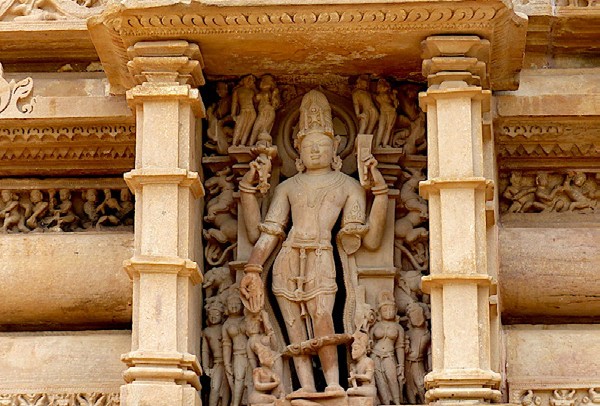
Statues of Gods (Khajuraho Temples)
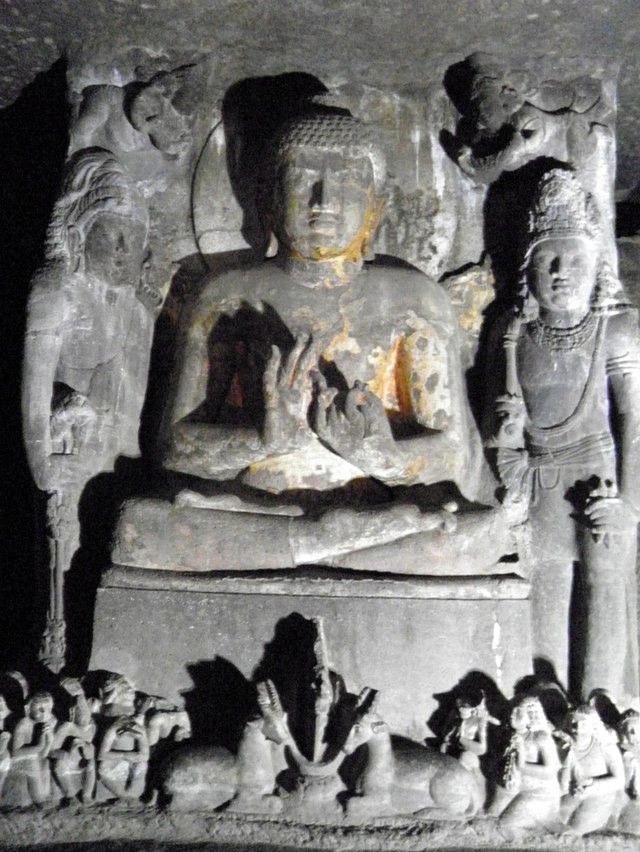
• Ajanta Cave Sculptures: The sculpture of Ajanta belongs to the great art-tradition of contemporary India. Sculpture from the 4th century AD, is remarkable for its grace, elegance, restraint and serenity. However, the general character of the sculpture of Ajanta tends towards a certain heaviness of form, and is considered inferior to the Gupta images. Every one of the sculptures was plastered and painted. But most of the plaster is now lost.
Prominent Sculptures at Ajanta:
• Naga King and his Consort, Cave 19
• Maha pari nirvana, Cave 2
• Hariti shrine, Cave 2
which add charm to the work.
• Chola art not only influenced the art of Ceylon, but it travelled as far away as Java and Sumatra.
• Nataraja images of Chola period represents climax in field of sculpture. They were made up of bronze with lost wax technique.
Conclusion
The world of ancient Indian sculptures is a mesmerizing realm where stone, metal and clay are transformed into expressions of divinity, humanity and the eternal quest for beauty and truth. Our exploration of this profound tradition reveals that Indian sculpture is not merely a collection of stone carvings or metal castings; it is a profound spiritual and artistic endeavor that has shaped the cultural heritage of the subcontinent.
Ancient Indian sculptures embody a remarkable diversity of forms, styles and subjects reflecting the multifaceted nature of Indian culture and spirituality. From the intricately detailed temples of Khajuraho to the serene Buddha statues of Sarnath, from the majestic reliefs of Ellora to the divine icons of Hinduism, Indian sculptures tell stories of devotion, creativity and the human spirit.
One of the defining features of ancient Indian sculptures is their capacity to convey deep spiritual and philosophical concepts. Whether in the depiction of gods and goddesses, the enlightened visage of Buddha or the intricate reliefs illustrating mythological narratives, these sculptures serve as powerful conduits for transmitting profound spiritual ideas to the masses.