STUPA ARCHITECTURE IN INDIA
The term stupa has Sanskrit origin and in its literal sense, it means “Heap”. In Pali texts, the term “Thupa” has been used for the structure of Stupa.
• Note: The first reference of the stupa is found in Rigveda (This word appears in several verses of the Rigveda, often referring to various objects like heaps of earth, offerings, or even flames).
• The Vedic concept of stupa evolved with the time and in general, it came to be associated with the structure built over the funeral place of important personalities (This structure would be extremely simple, made-up using Bamboos and wooden material).
• However, the stupa architecture in its proper form emerged during 5th century BCE after the death of Mahatma Buddha. The remains (relics) of Buddha were distributed among various kingdoms. These relics were placed in Stupas built by the significant personalities of that time (According to the Buddhist text Mahaparinibbana Sutta, 8 Stupas were built).
Types of stupas: Five types on the basis of the purpose associated with their construction
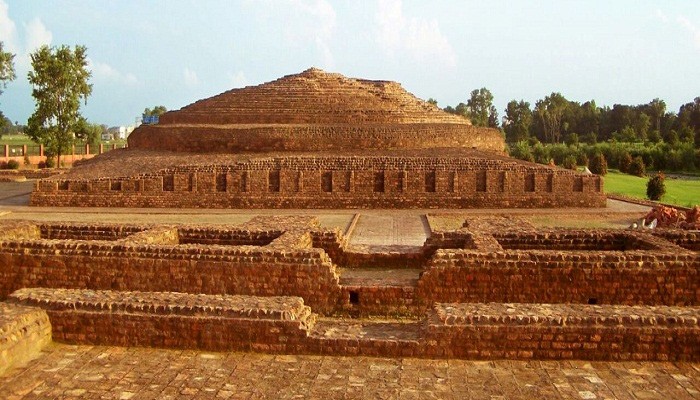
Stupa a t Piprahwa
• Relic Stupas: Constructed on bodily remains of Buddha, his disciples and Bodhisattvas (Note: These are considered to be the most sacred). Example: Piprahwa Stupa and Sanchi Stupa.
• Object Stupas: Constructed on personal belongings used by Buddha, his disciples and Bodhisattvas. Example: Kesariya Stupa Built by emperor Ashoka
over Buddha’s begging bowl.
• Commemorative Stupa: Built in the memory of important events related to the life of Buddha and Bodhisattvas. Example: Dhamek Stupa Built at the location where Lord Buddha is believed to have delivered his first
sermon after attaining enlightenment.
• Symbolic Stupas: Built to symbolize the invisible presence of Budhha (since he was considered to be the God, so he was believed to be present everywhere) Note: Relics and objects were not used in these stupas. Example: Amaravati Stupa built by Satavahanas.
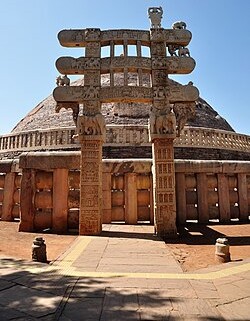
Th e Great Stupa at Sanchi
Votive Stupas: Built by devotees at significant Buddhist centres and monasteries in the vicinity of main stupas (Note:
There were very small in size). Such votive stupas can be seen at Sarnath, Lumbini and many other places.
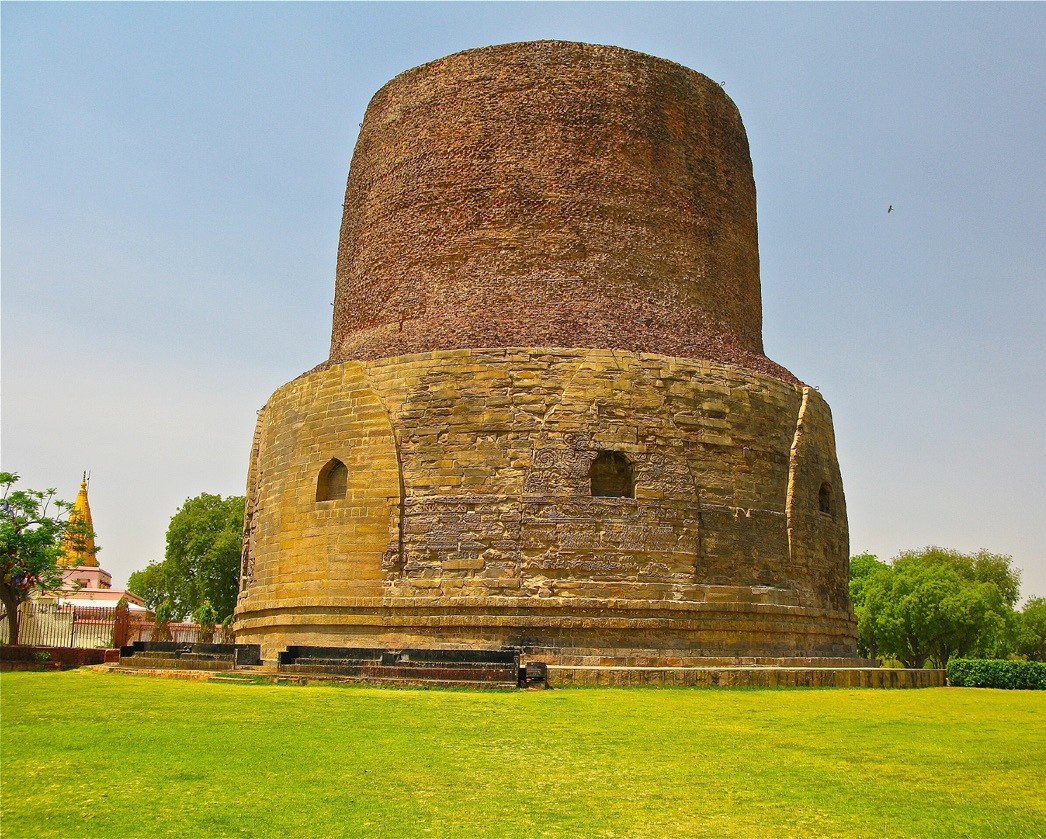
Dhamek Stupa, Sarnath