The Chola Dynasty (Refinement in Dravidian Architecture)
The Cholas, ruling South India from the 9th to the 13th centuries, inherited the Dravidian temple style from the Pallavas but took it to unprecedented heights of refinement and grandeur.
Unlike the Pallava preference for rock-cut temples, the Cholas primarily used stone as their building material. This allowed for larger, more intricate structures that have stood the test of time.
Brihadeshwara temple in Thanjavur

The gopurams, monumental gateways to the temple complex, became even more prominent under the Cholas. These towering structures, adorned with vibrant sculptures depicting scenes from Hindu mythology, served as both aesthetic marvels and welcoming entrances to the sacred space.
The vimanas, the sanctum sanctorum towers housing the main deity, reached new heights of grandeur under the Cholas. The Brihadeshwara temple in Thanjavur is a prime example, boasting a vimana that soars 66 meters into the sky, a testament to Chola engineering prowess.
The Cholas placed a greater emphasis on sculpture, embellishing temple walls with intricate carvings depicting tales from the epics, celestial figures and everyday life. These narratives in stone offered spiritual guidance and visual storytelling for devotees.
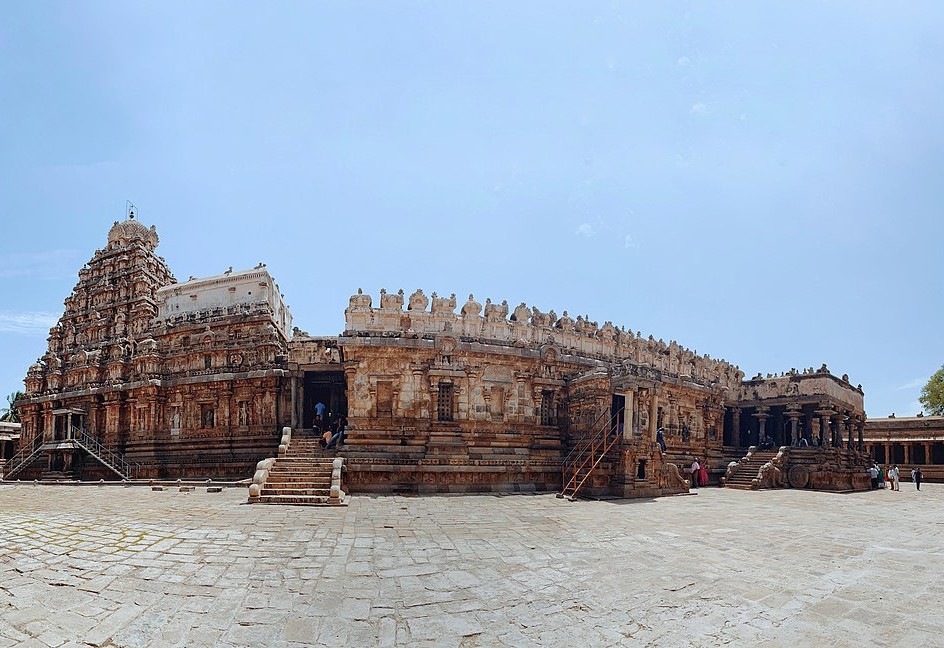
While often known for their monumental temples, the Cholas also built smaller shrines and mandapas within temple complexes, showcasing their architectural versatility. They further enriched the style by introducing intricate designs like the kumbha panjara, a decorative element resembling a bulbous water pot.

Mahanavami Dibba