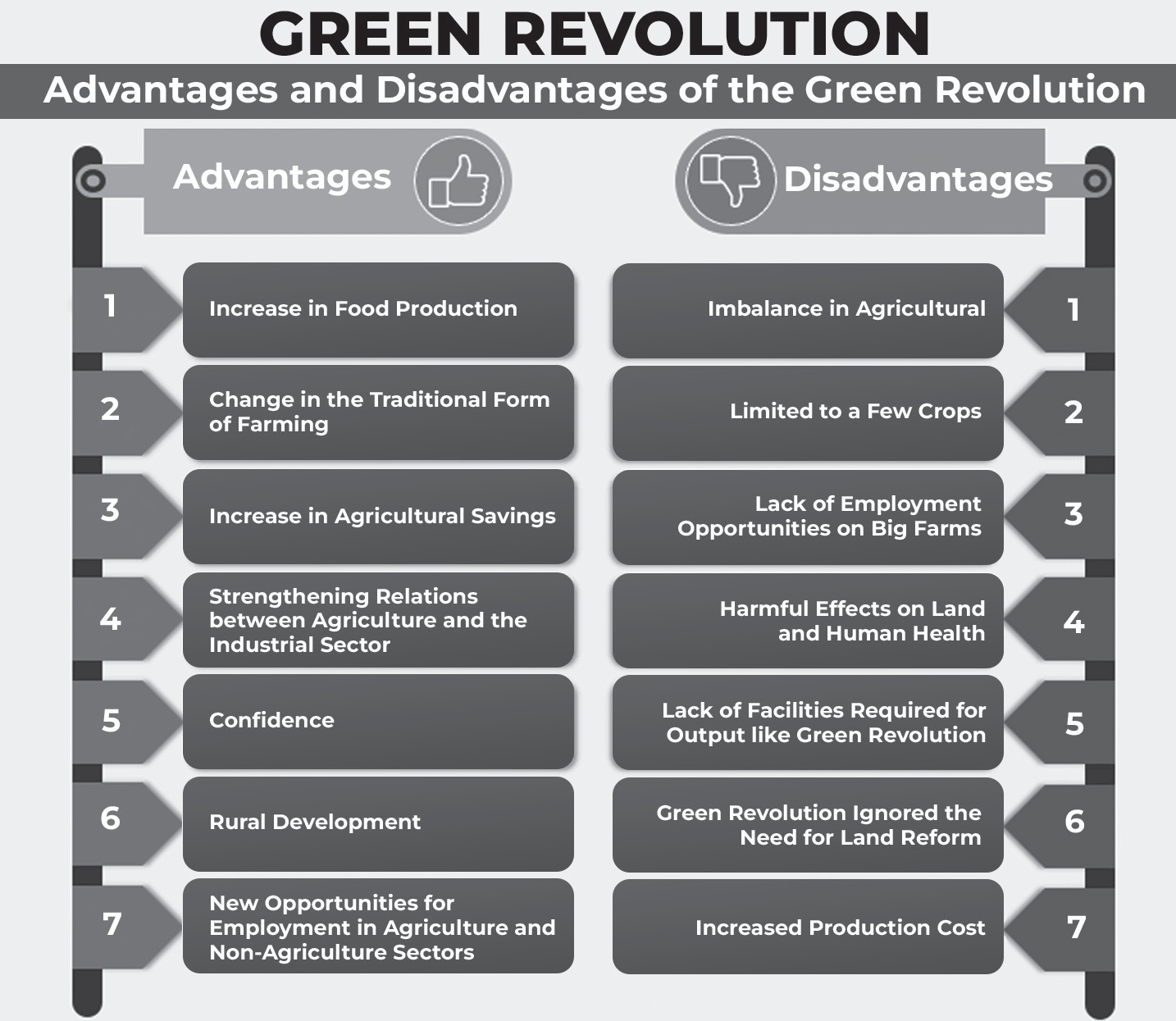
The negative impacts of the Green Revolution
The Green Revolution led to significant class and regional
disparities, creating a fertile ground for left-wing groups to rally poor peasants and advocate for more radical approaches to secure their rights—laying the groundwork for Left-Wing Extremism.
Alongside, the rise of middle peasants with medium- sized landholdings marked a shift. These farmers, who benefited greatly from the revolution, eventually gained considerable political influence in various regions.
However, the environmental toll was substantial.
Repetitive cropping and increased intensity led to a decline in soil fertility.
The widespread use of tube wells caused a sharp drop in the water table, particularly in Punjab and Haryana.
The Green Revolution also triggered a massive loss of biodiversity, with many indigenous crop varieties disappearing.
The heavy use of fertilizers, pesticides, and herbicides led to soil contamination and toxicity.
Health problems surged due to the overuse of chemicals, including higher rates of cancer, renal failure, stillbirths, and congenital disabilities.
Unfortunately, tenants and sharecroppers without land security were the main losers in this scenario. To placate farmers in the Green Revolution areas, many political parties offered subsidized or free electricity, which was often misused, ultimately harming the broader health of the economy.